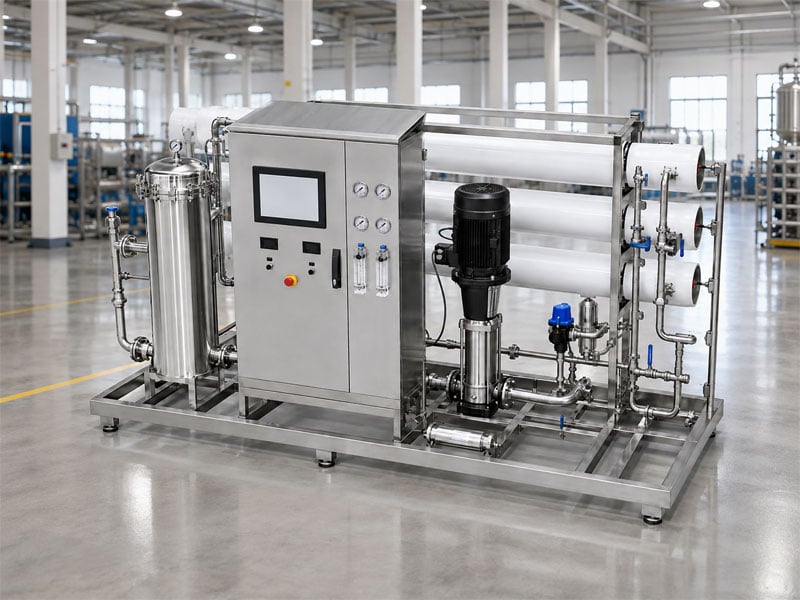
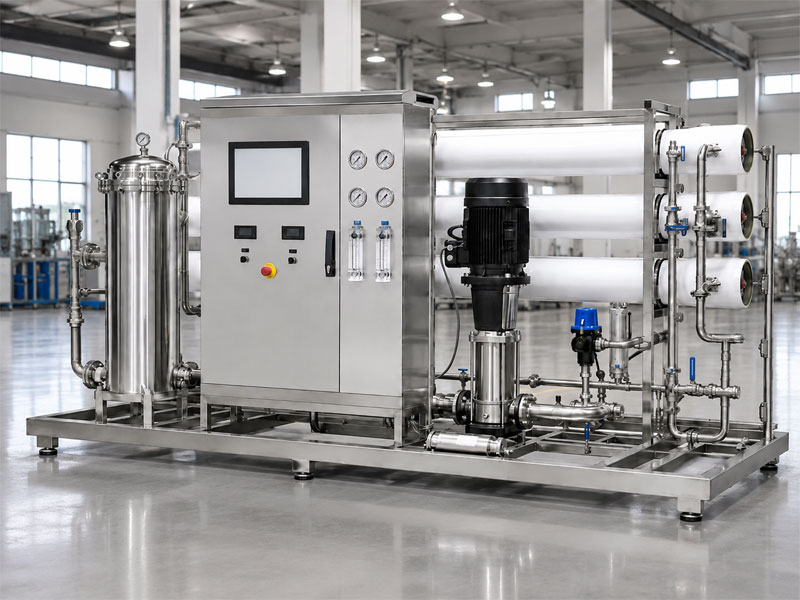
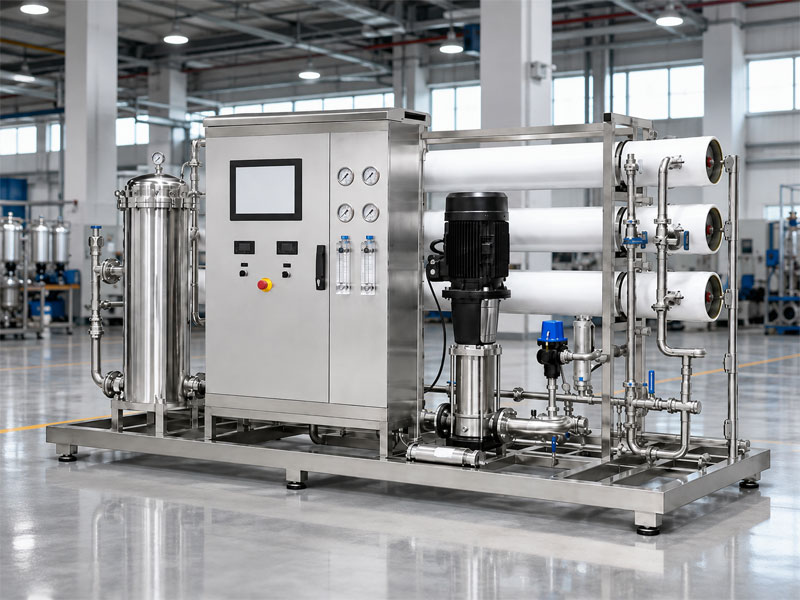
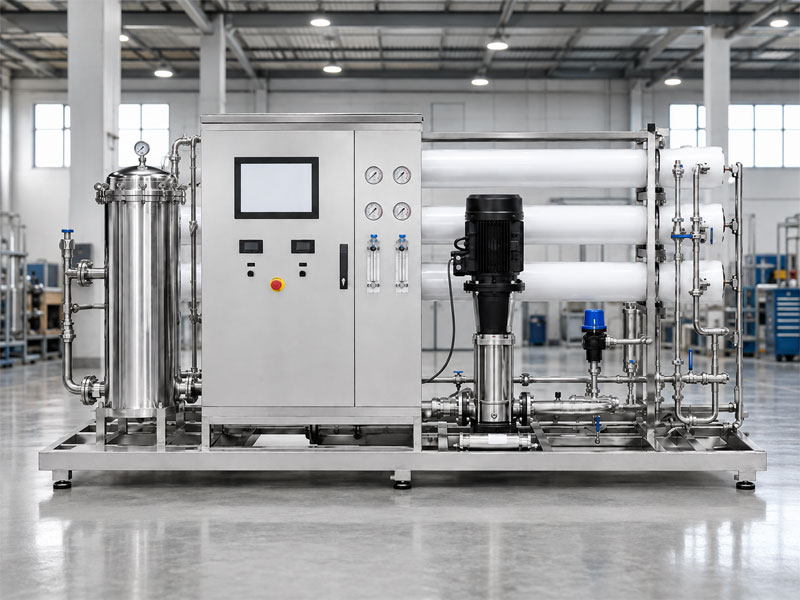
5 m³/h Industrial Reverse Osmosis System
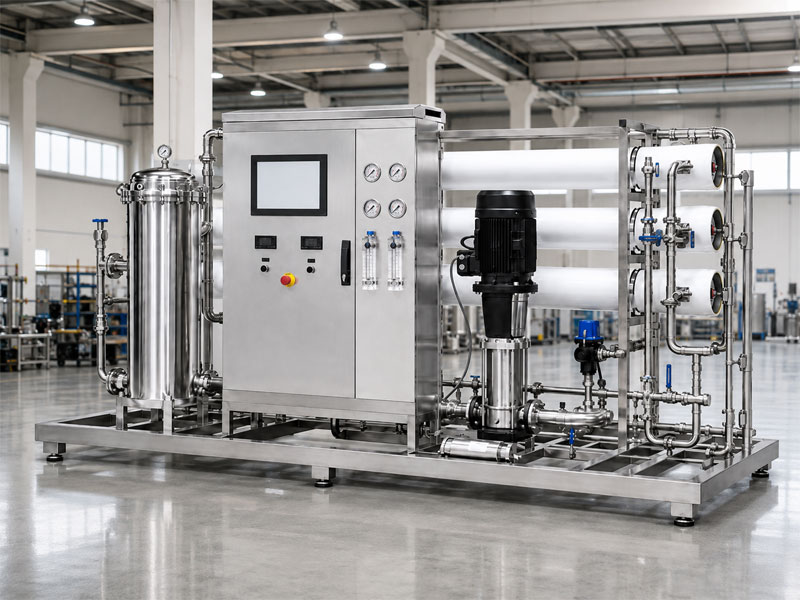
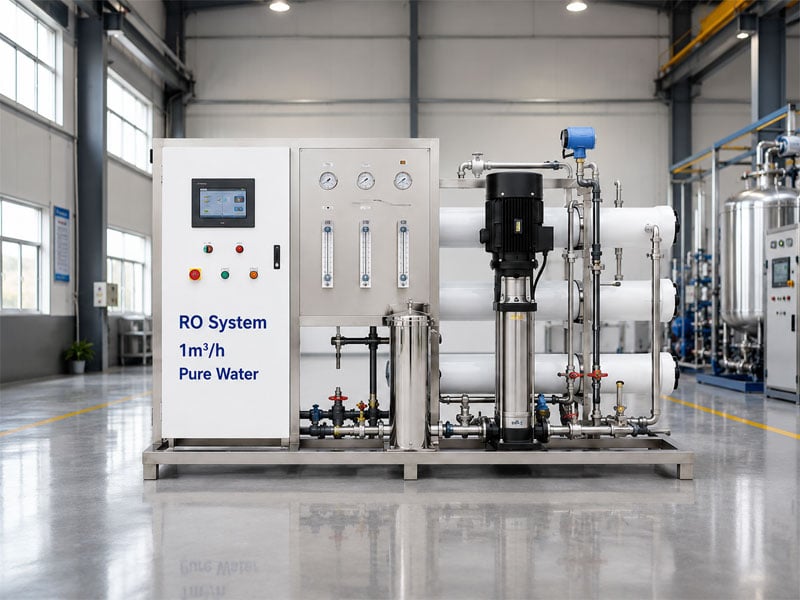
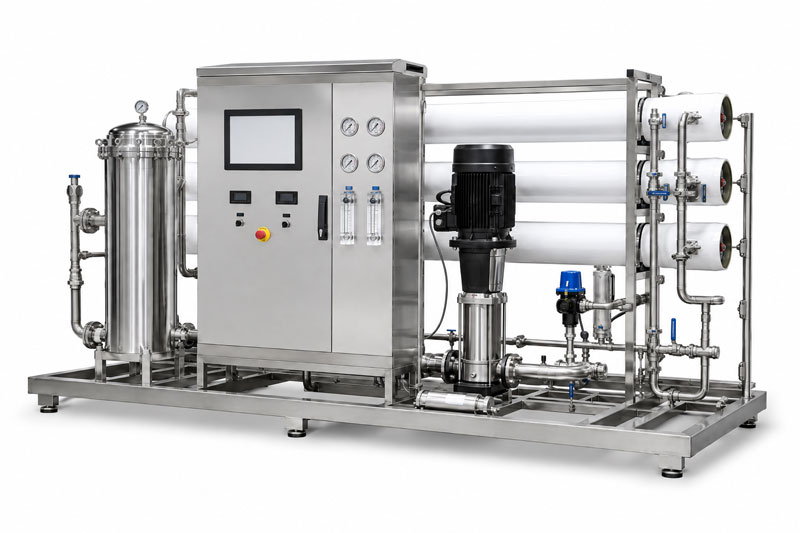
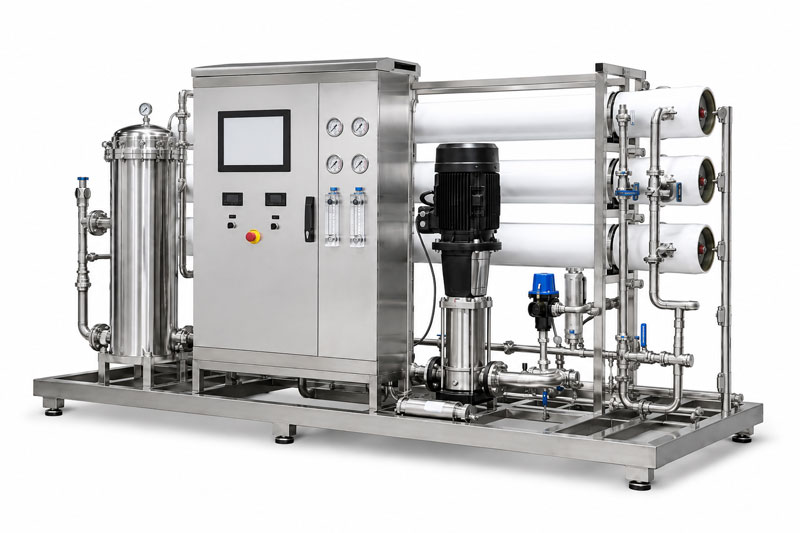
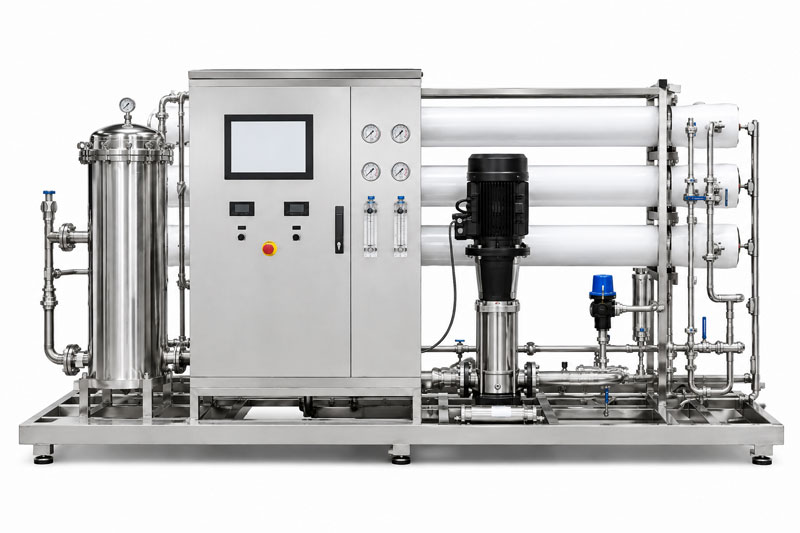
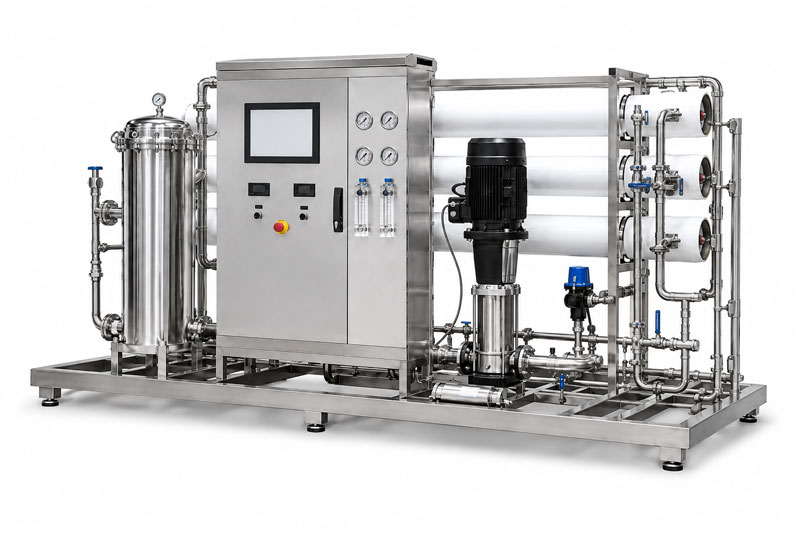
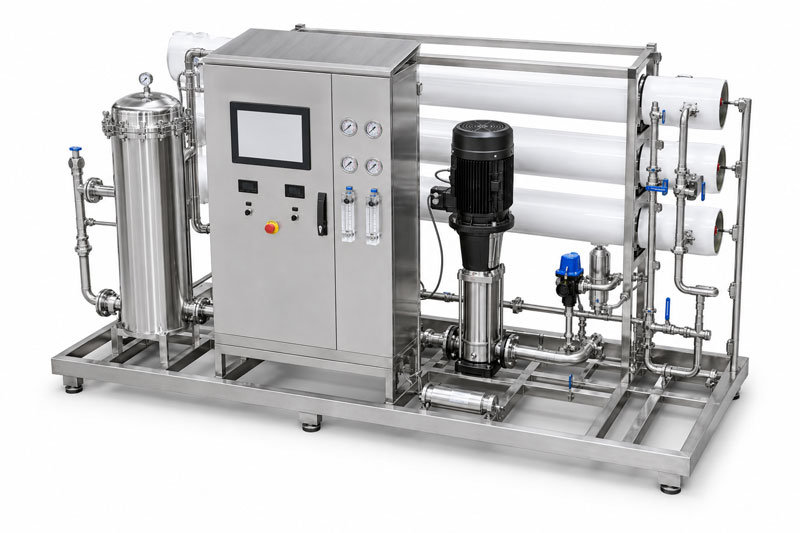
The 5 m³/h Industrial Reverse Osmosis System is built for stable process-water production in medium-scale factories and industrial facilities that need reliable daily output. As an industrial RO system, it is designed to combine pretreatment, membrane separation, online monitoring and automatic operation in one practical reverse osmosis system layout. For buyers comparing an RO water treatment system for production use, this configuration offers a balanced approach to water quality, operating stability and project flexibility.
Compared with smaller units, this industrial RO system is usually arranged with a more complete pretreatment section, an industrial-grade high-pressure pump, online instruments and automated control logic. That structure helps the reverse osmosis system handle changing feed conditions more smoothly and supports long-term operation in demanding environments. When a factory needs an RO water treatment system that can run consistently rather than as a simple lab unit, this 5 m³/h Industrial Reverse Osmosis System is a strong standard choice.
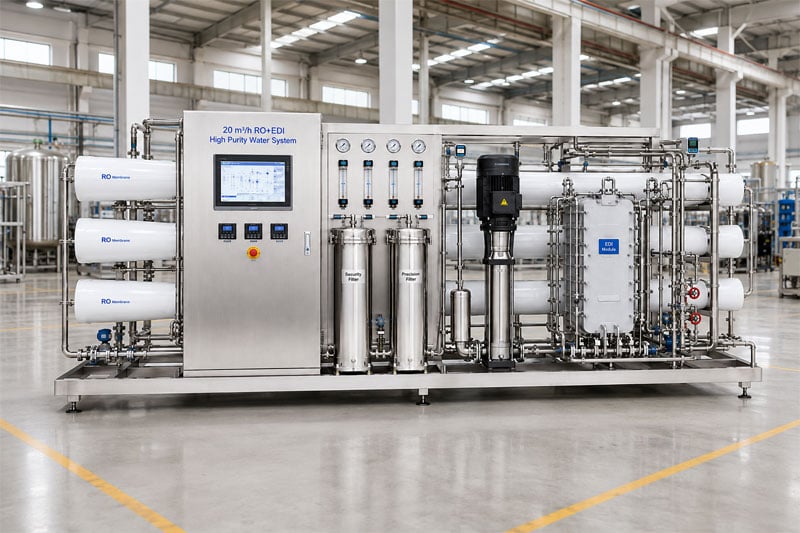
The 5 m³/h Industrial Reverse Osmosis System can be configured as a single-pass reverse osmosis system for general purified water needs or as a double-pass reverse osmosis system when lower conductivity is required. In many projects, the industrial RO system is selected not only for output volume, but also for how easily it can be matched to process targets. This reverse osmosis system therefore suits plants that need dependable water quality for production, washing, utility water or further polishing.
Pretreatment is an important part of any RO water treatment system, and this industrial RO system can be designed according to the actual feed-water analysis. Depending on source water quality, the reverse osmosis system may include multimedia filtration, activated carbon filtration, softening, ultrafiltration or chemical dosing. These stages protect the membranes, reduce fouling risk and improve operating stability, which is especially important when the 5 m³/h Industrial Reverse Osmosis System is expected to run continuously in a busy plant.
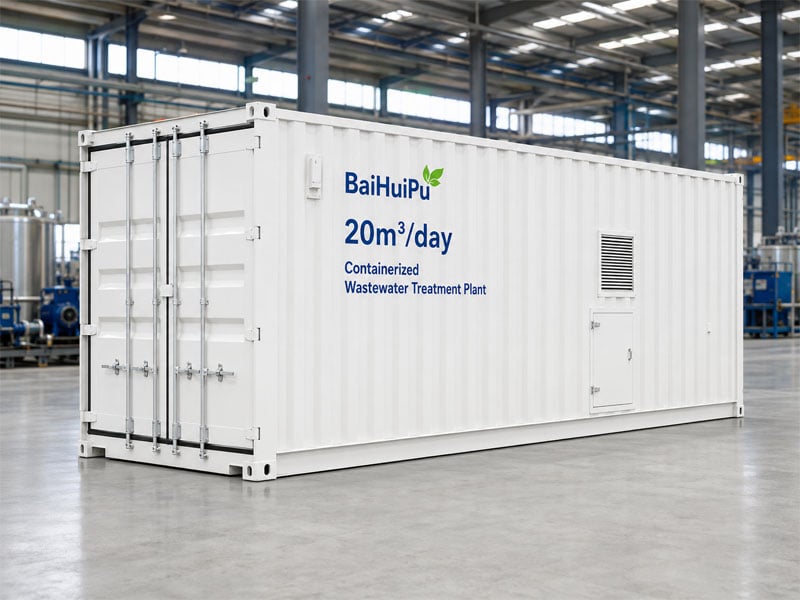
The skid-mounted modular structure makes the industrial RO system easier to install, transport and integrate into a plant room or containerized layout. Because the reverse osmosis system is built as a modular RO water treatment system, it can be adjusted for different site conditions, available space and water quality targets. This is one reason the 5 m³/h Industrial Reverse Osmosis System is often considered for overseas projects, upgrade projects and new production lines that need a compact but complete solution.
In real application, the industrial RO system is widely used where consistent purified water supports process reliability. The reverse osmosis system is suitable for food factories, beverage production, electronics manufacturing, chemical plants, general manufacturing, boiler feed water, cooling system make-up water, metal finishing, industrial washing, process-water production and pharmaceutical pretreatment water. For these industries, an RO water treatment system with stable output and flexible pretreatment can help reduce downstream water-related issues and support more predictable production.
Typical performance for this industrial RO system depends on feed-water quality and final configuration, but the design commonly aims for high desalination efficiency and practical recovery. In many projects, the reverse osmosis system delivers up to approximately 98–99% RO rejection with an approximate recovery range of 60–75%. Those values make the RO water treatment system suitable for buyers who need a dependable balance between water savings, membrane protection and product-water quality.
The process flow for the 5 m³/h Industrial Reverse Osmosis System is straightforward and easy for operators to understand. Feed water is stored in the raw water tank, then transferred through the feed pump, multimedia filter, activated carbon filter, softener or antiscalant stage, cartridge filter, high-pressure pump and RO membranes before entering the product water tank. In a double-pass reverse osmosis system, the first-pass permeate can move to an intermediate tank and then into the second-pass RO stage for higher purity, which is useful when an RO water treatment system must meet tighter quality requirements.
From the working principle side, the industrial RO system uses pretreatment to reduce suspended solids, chlorine, hardness and fouling contaminants before the membrane section. The cartridge filter then protects pumps and membranes from fine particles, while the high-pressure pump provides the pressure needed for membrane separation. Inside the reverse osmosis system, the membranes separate purified water from concentrated dissolved salts, and the monitoring instruments track flow, pressure and conductivity so product water can be collected with confidence. This is why the 5 m³/h Industrial Reverse Osmosis System is valued as a reliable RO water treatment system for continuous use.
Customization is often a deciding factor in industrial procurement, and this industrial RO system supports many options to match actual project conditions. Buyers can choose single-pass reverse osmosis system or double-pass reverse osmosis system layouts, along with multimedia filtration, activated carbon filtration, water softening, ultrafiltration pretreatment, antiscalant dosing, SMBS dosing, pH adjustment, UV sterilization, ozone sterilization, stainless steel product-water piping, CIP cleaning station, PLC/HMI, VFD control, online conductivity, online pH, online ORP, remote access, RO membrane brand selection and pump brand selection. With these options, the reverse osmosis system can be adapted into an RO water treatment system that fits different plant standards and water targets.
Key Features
- 5 m³/h industrial product‑water capacity
- Continuous automatic operation
- High desalination performance
- Single‑pass or double‑pass RO
- PLC/HMI automation available
- Online flow, pressure and conductivity monitoring
- Optimized pretreatment
- Automatic flushing
- CIP cleaning options
- Modular skid‑mounted construction
Typical Applications
- Food factories
- Beverage production
- Electronics manufacturing
- Chemical plants
- General manufacturing
- Boiler feed water
- Cooling system make‑up water
- Metal finishing
- Industrial washing
- Process‑water production
- Pharmaceutical pretreatment water
Reference Technical Parameters
| Parameter |
Reference Specification |
| Product Water Flow |
5 m³/h |
| Process |
Pretreatment + RO |
| Feed TDS |
Project‑specific |
| Typical RO Rejection |
Up to approx. 98–99% |
| Typical Recovery |
Approx. 60–75% |
| RO Configuration |
Single‑pass / double‑pass |
| Pretreatment |
MMF / ACF / softener / UF optional |
| Antiscalant Dosing |
Optional |
| High‑Pressure Pump |
Industrial‑grade |
| Membrane Housing |
FRP / stainless steel optional |
| Conductivity Monitoring |
Standard / optional by configuration |
| Flow Monitoring |
Available |
| Automatic Flush |
Available |
| CIP System |
Optional |
| PLC/HMI |
Optional / recommended |
| Remote Monitoring |
Optional |
Typical Process Flow
Feed Water → Raw Water Tank → Feed Pump → Multimedia Filter → Activated Carbon Filter → Softener / Antiscalant → Cartridge Filter → High‑Pressure Pump → RO Membranes → Product Water Tank
Optional double‑pass configuration:
First‑Pass RO → Intermediate Tank → Second‑Pass RO → Purified Water Tank
How It Works
Step 1 — Pretreatment
Suspended solids, chlorine, hardness and fouling contaminants are reduced before the RO membrane section.
Step 2 — Precision Filtration
Cartridge filtration protects pumps and membranes from fine particles.
Step 3 — Pressurization
The high‑pressure pump provides sufficient pressure for membrane separation.
Step 4 — RO Desalination
RO membranes separate purified water from concentrated dissolved salts.
Step 5 — Monitoring and Collection
Conductivity, flow and pressure can be continuously monitored before product water enters storage or production.
Customization Options
- Single‑pass RO
- Double‑pass RO
- Multimedia filtration
- Activated carbon filtration
- Water softening
- Ultrafiltration pretreatment
- Antiscalant dosing
- SMBS dosing
- pH adjustment
- UV sterilization
- Ozone sterilization
- Stainless steel product‑water piping
- CIP cleaning station
- PLC/HMI
- VFD control
- Online conductivity
- Online pH
- Online ORP
- Remote access
- RO membrane brand selection
- Pump brand selection
Why Choose This Model?
The 5 m³/h configuration covers a common industrial water‑demand range and is suitable for many medium‑sized production facilities.
It offers a balance between investment cost, automation, operating stability and future expansion, making it a strong standard model for overseas industrial projects.
FAQ
Is 5 m³/h the feed‑water capacity or product‑water capacity?
The stated capacity normally refers to nominal product‑water output. Required feed flow depends on the designed recovery rate.
What recovery rate can the system achieve?
Typical recovery may range around 60–75%, but final design must account for feed‑water salinity, hardness, silica, scaling potential and membrane configuration.
Can the system run 24 hours per day?
Yes. Industrial RO systems can be designed for continuous operation. Storage capacity, duty/standby pumps and maintenance requirements should be considered for critical applications.
Should I choose single‑pass or double‑pass RO?
Single‑pass RO is commonly suitable for general purified‑water applications. Double‑pass RO is used when significantly lower conductivity or TDS is required.
Does the system include pretreatment?
Pretreatment can be included as a complete system. The actual configuration depends on feed‑water analysis.
Can the equipment be containerized?
Yes. RO plants can be installed in containerized packages for remote or overseas projects.
Recommended CTA
Planning a 5 m³/h industrial RO project?
Send us your feed‑water report and target product‑water quality. We can calculate the recommended recovery rate, membrane configuration and pretreatment process.
CTA Button: Request RO System Design

 EN