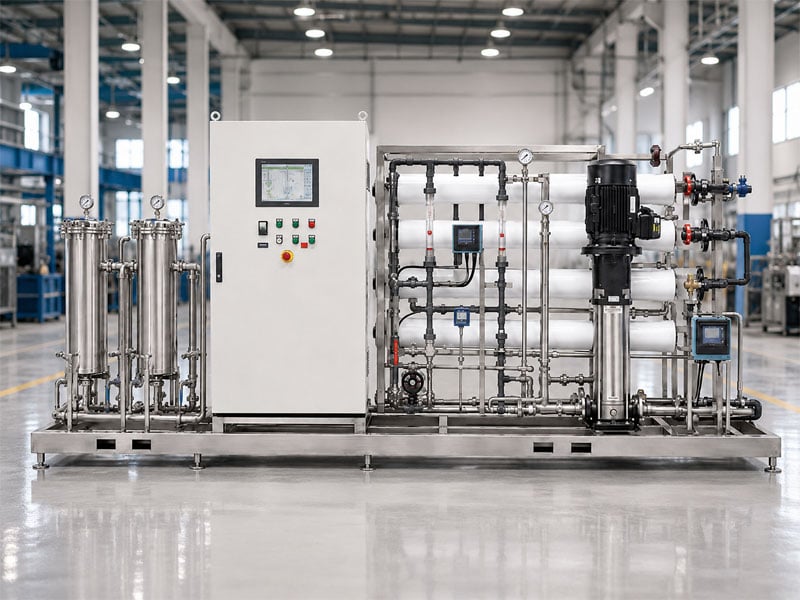
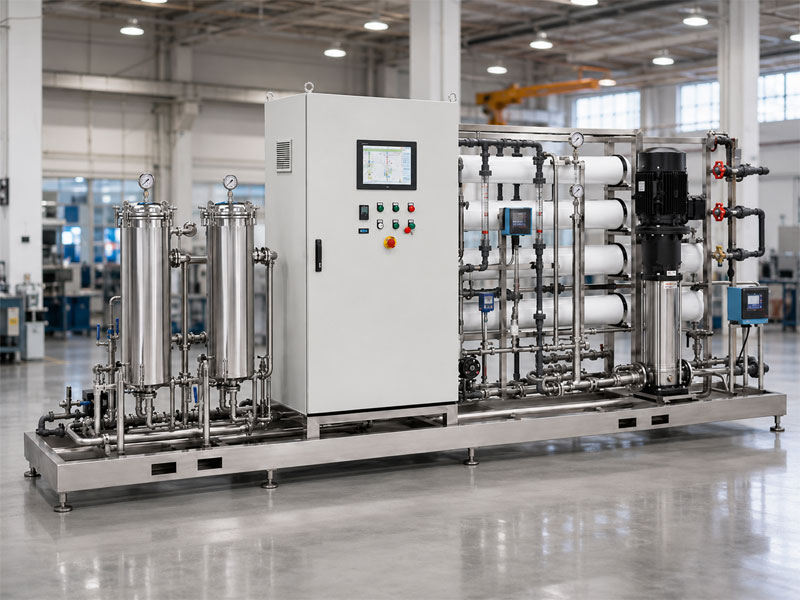
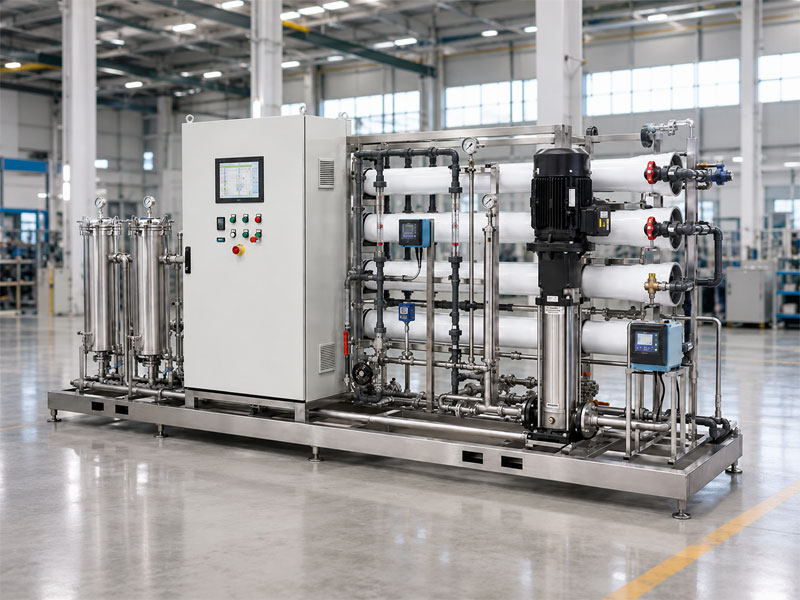
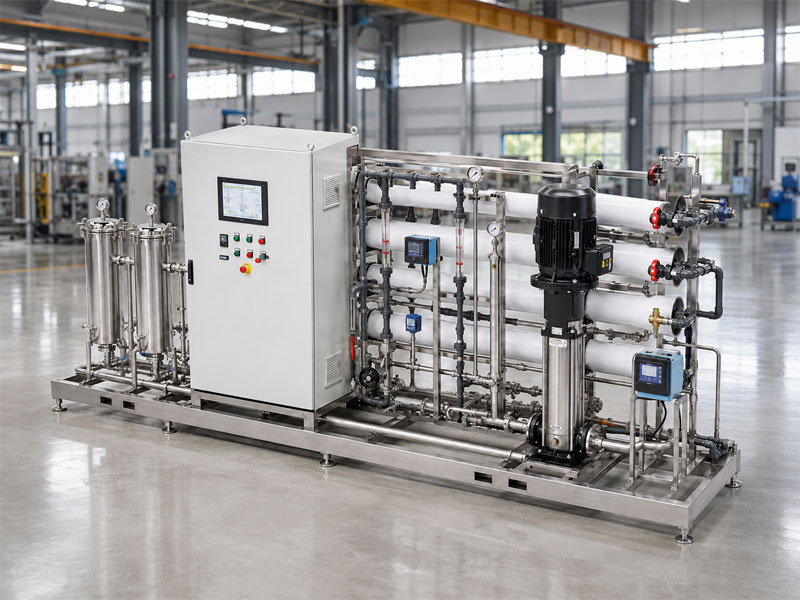
10 m³h Industrial RO Water Treatment System
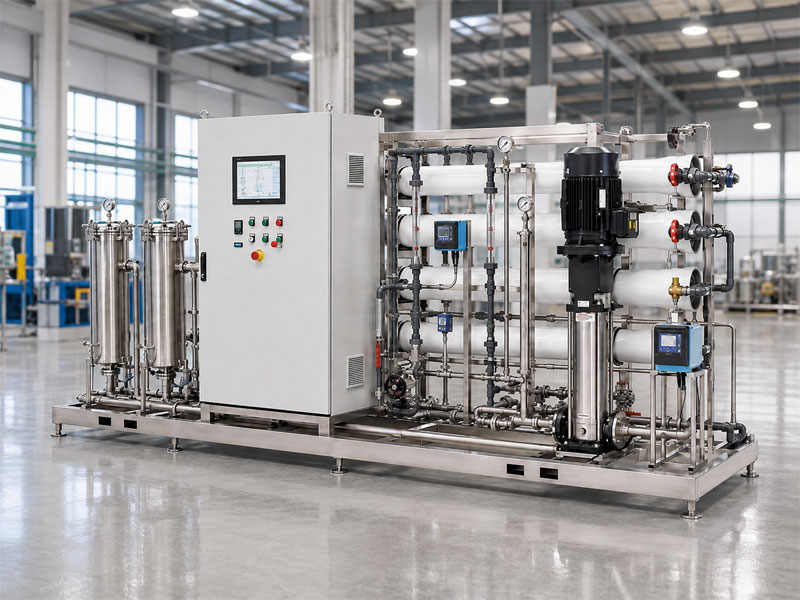
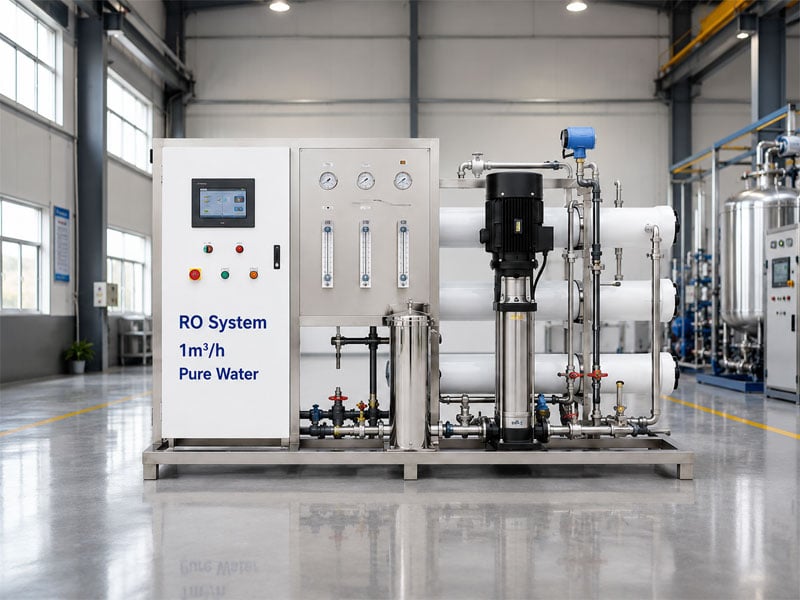
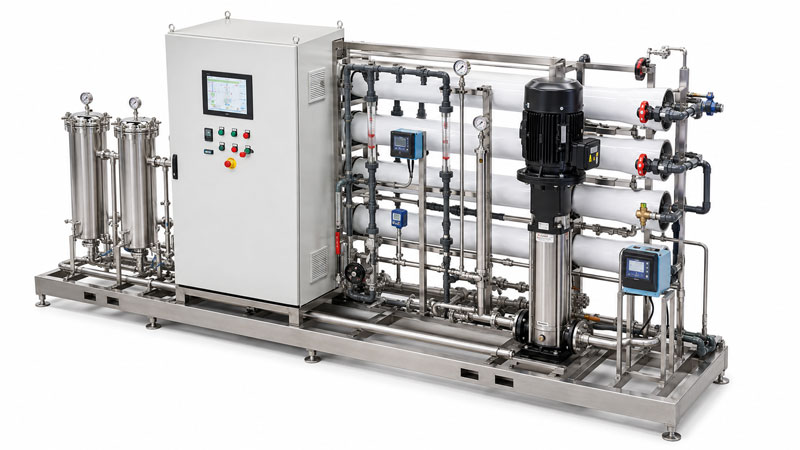
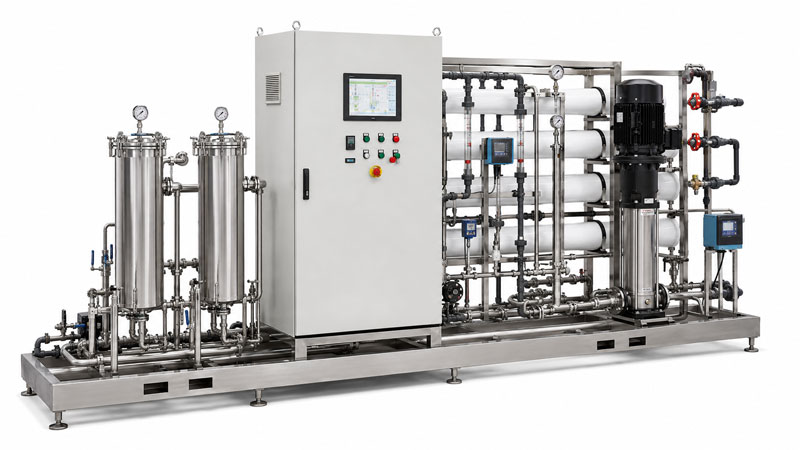
The 10 m³/h Industrial RO Water Treatment System is built for factories that need stable, continuous purified water for production lines, utility systems, and downstream processing. As an industrial RO system, it combines pretreatment, reverse osmosis, chemical dosing, automatic flushing, and online monitoring into one practical water-treatment package. Many buyers look for an RO water treatment system that can run with consistent output, straightforward operation, and flexible design options, and this reverse osmosis system is developed with those priorities in mind. It can be arranged as a single-pass unit for general industrial use or configured for higher water quality when the process demands more control.
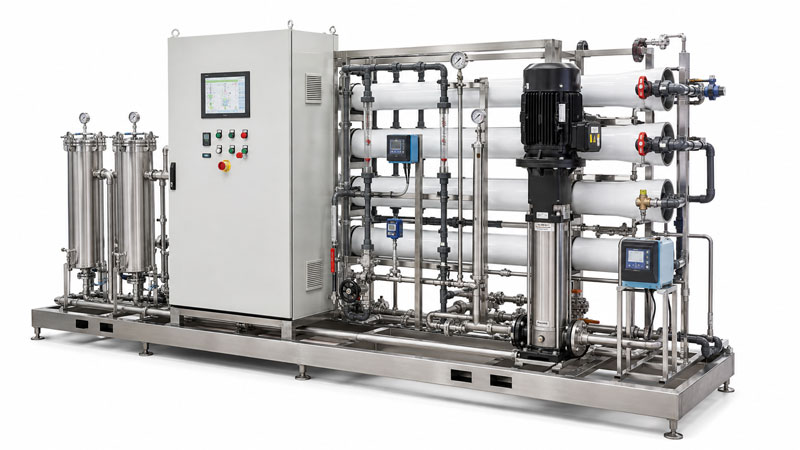
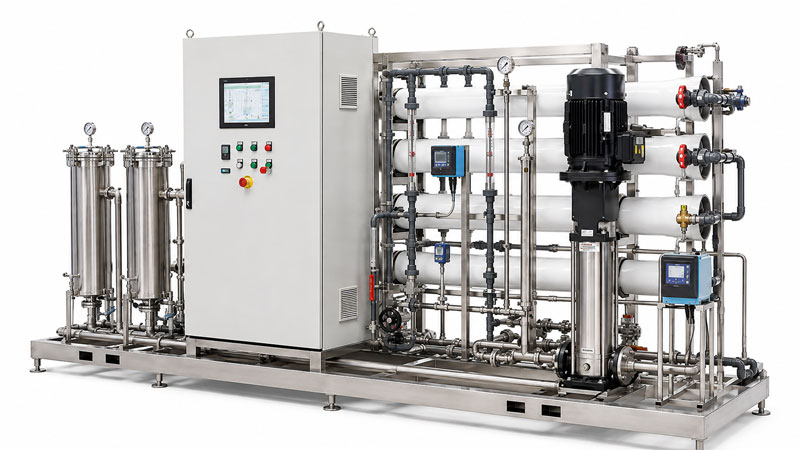
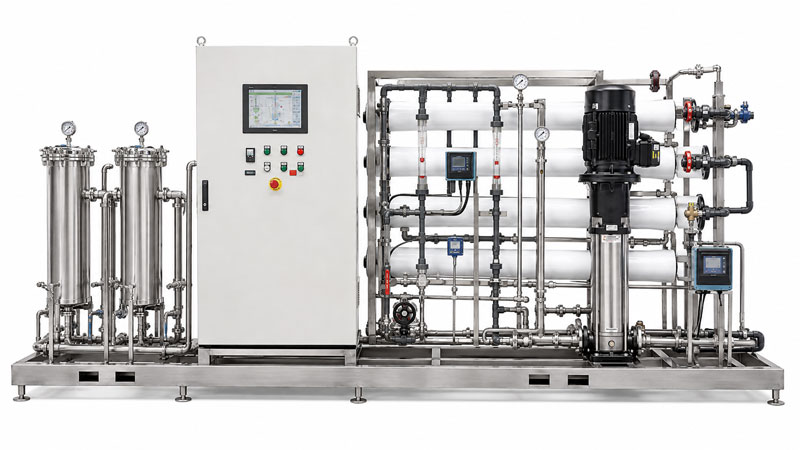
In daily operation, the industrial RO system is designed for continuous-duty service and controlled by PLC/HMI logic for easier supervision. Operators can monitor pressure, flow, conductivity, and tank status in real time, which helps the RO water treatment system remain stable during long production schedules. Automatic membrane flushing supports cleaner operation, while optional CIP cleaning provides a practical way to restore performance when fouling or scaling develops. For factories that depend on uninterrupted water supply, a reverse osmosis system with this level of automation reduces manual intervention and supports more predictable running costs. The 10 m³/h Industrial RO Water Treatment System is therefore well suited to plants that value reliability as much as output.
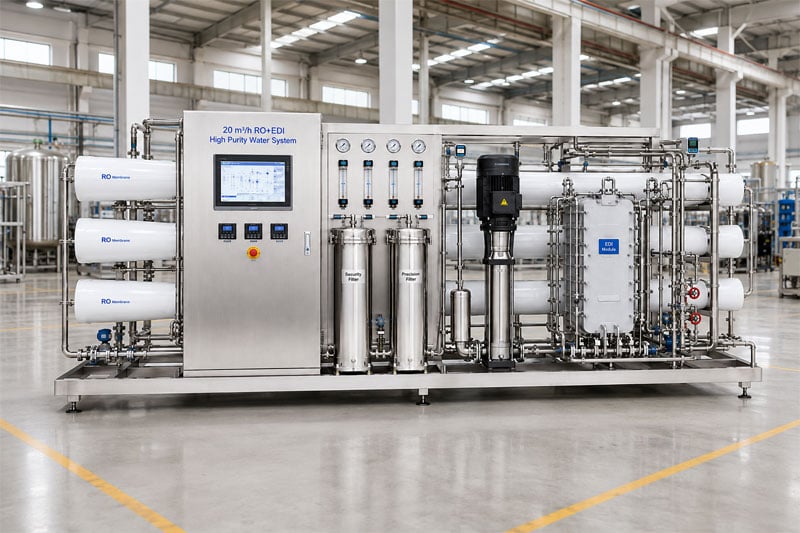
Typical process layouts can be adapted around the same industrial RO system core. One common RO water treatment system layout is raw water, multimedia filter, activated carbon, softener, cartridge filter, RO, and pure water tank, which suits many general industrial users. A higher-purity reverse osmosis system may use ultrafiltration before RO and a second-pass RO stage after the first membrane bank. For boiler feed water, the industrial RO system can be paired with degassing or EDI options when required by the target specification. Each RO water treatment system is therefore designed around the actual feed-water chemistry, the plant's operating hours, and the quality standard expected at the point of use.
This 10 m³/h Industrial RO Water Treatment System is commonly selected for boiler feed water, electronics manufacturing, electroplating, metal finishing, chemical production, food and beverage, textile processing, machinery manufacturing, automotive components, industrial washing, cooling tower make-up, and general process water. In each case, the industrial RO system helps protect equipment, improve process consistency, and reduce the risk caused by unstable incoming water. A reverse osmosis system is especially important where conductivity, hardness, or suspended contaminants can affect product quality or production stability. For buyers comparing options, a well-designed RO water treatment system offers more than purification; it supports the wider production environment.
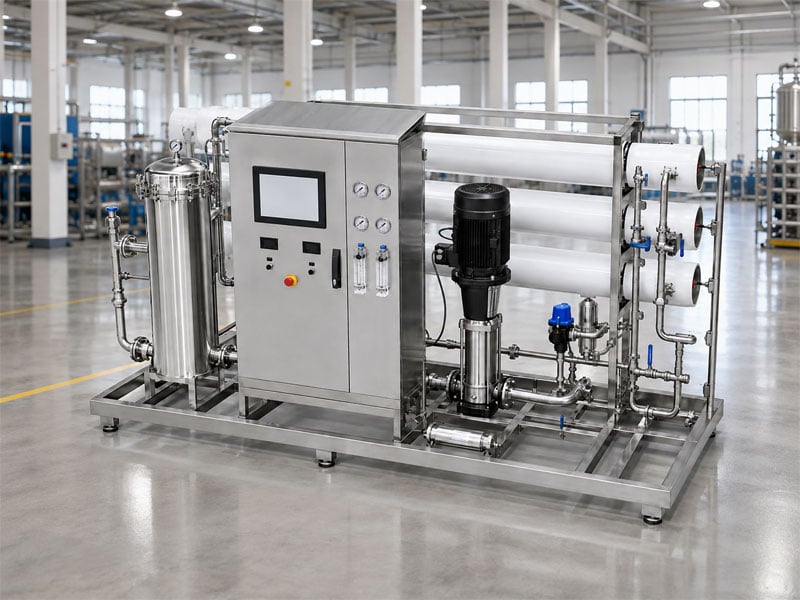
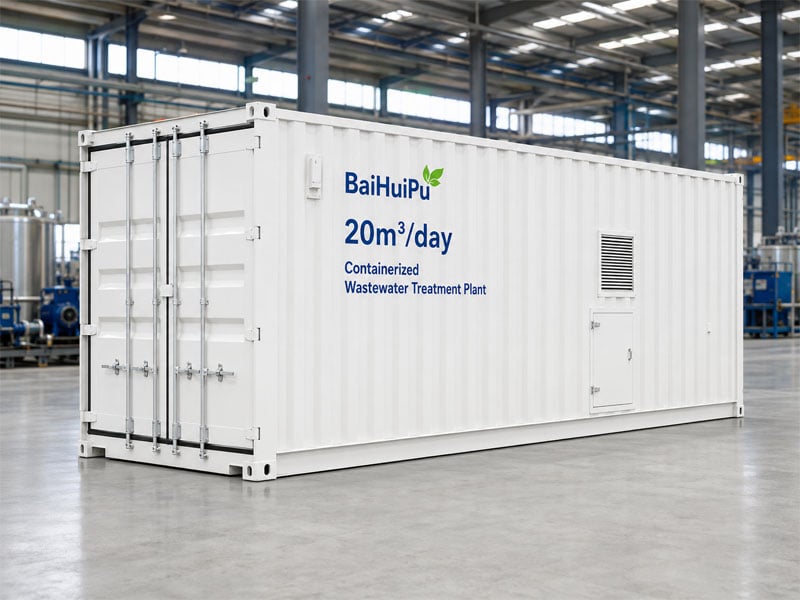
The reference technical specification shows the practical scope of the 10 m³/h Industrial RO Water Treatment System: 10 m³/h product-water flow, single-pass or double-pass RO configuration, municipal or groundwater feed, salt rejection up to approximately 98-99%, and project-specific recovery. Pretreatment options may include MMF, ACF, softener, or UF, while cartridge filtration is included for feed protection. The industrial RO system also uses an industrial continuous-duty high-pressure pump, with conductivity, pressure, and flow monitoring available for operator control. Automatic flush is available, CIP is optional or recommended, and control is handled through PLC/HMI. This makes the RO water treatment system suitable for skid, modular, or containerized installation according to site conditions. As a reverse osmosis system, it is designed to integrate into a larger factory water plan with clear operating logic and maintainable layout.
How it works is straightforward. First, raw-water conditioning removes contaminants that could foul membranes, create scaling, or cause oxidation problems. Next, dosing and cartridge filtration prepare the water entering the industrial RO system so the membranes can operate more steadily. Then the reverse osmosis system separates feed water into purified permeate and concentrated reject water under pressure. After that, PLC/HMI monitoring tracks pressure, conductivity, flow, tank level, and equipment status so the RO water treatment system can respond to process changes. Finally, the purified water is sent to storage or to a downstream polishing stage. This sequence is one reason many buyers prefer an industrial RO system over simpler treatment equipment.
Product Overview
The 10 m³/h Industrial RO Water Treatment System is designed for industrial facilities requiring larger volumes of purified process water with stable automatic operation.
The system can integrate pretreatment, reverse osmosis, chemical dosing, online monitoring, automatic flushing and CIP cleaning into a centralized skid‑mounted water‑treatment package.
For applications requiring different water qualities, the system can be designed as single‑pass RO, double‑pass RO or combined with UF, softening, EDI and polishing technologies.
This capacity is commonly used in factories where water quality directly affects production equipment, product quality, boiler operation or manufacturing stability.
Key Features
- 10 m³/h nominal purified‑water output
- Industrial continuous‑duty design
- Automatic PLC/HMI operation
- Real‑time conductivity monitoring
- Pressure and flow monitoring
- Single‑pass or double‑pass RO options
- Automatic membrane flushing
- CIP cleaning integration
- Modular pretreatment options
- Expandable water‑treatment architecture
Typical Applications
- Boiler feed water
- Electronics manufacturing
- Electroplating
- Metal finishing
- Chemical production
- Food and beverage
- Textile processing
- Machinery manufacturing
- Automotive component production
- Industrial washing
- Cooling tower make‑up
- General process water
Reference Technical Parameters
| Parameter |
Reference Specification |
| Product Water Flow |
10 m³/h |
| RO Configuration |
Single‑pass / double‑pass |
| Feed‑Water Source |
Municipal / groundwater / treated surface water |
| Typical Salt Rejection |
Up to approx. 98–99% |
| Typical Recovery |
Project‑specific |
| Pretreatment |
MMF / ACF / softener / UF |
| Cartridge Filtration |
Included |
| High‑Pressure Pump |
Industrial continuous‑duty |
| Conductivity Monitoring |
Available |
| Pressure Monitoring |
Available |
| Flow Monitoring |
Available |
| Automatic Flush |
Available |
| CIP System |
Optional / recommended |
| Control |
PLC/HMI |
| Remote Monitoring |
Optional |
| Installation |
Skid / modular / containerized optional |
Recommended Process Configurations
Configuration A — General Industrial Pure Water
Raw Water → Multimedia Filter → Activated Carbon → Softener → Cartridge Filter → RO → Pure Water Tank
Configuration B — High‑Quality Industrial Water
Raw Water → UF → RO → Second‑Pass RO → Pure Water Tank
Configuration C — Boiler Feed Water
Pretreatment → RO → Degassing / EDI Optional → Boiler Feed Tank
Final configuration depends on feed‑water chemistry and boiler or process requirements.
How It Works
Step 1 — Raw‑Water Conditioning
Pretreatment removes contaminants that can cause membrane fouling, scaling or oxidation.
Step 2 — RO Feed Preparation
Chemical dosing and cartridge filtration stabilize the water entering the RO membrane system.
Step 3 — Membrane Separation
High‑pressure RO membranes divide feed water into purified permeate and concentrated reject water.
Step 4 — Automatic Monitoring
PLC/HMI can monitor pressure, conductivity, flow, tank levels and equipment status.
Step 5 — Product‑Water Supply
Purified water enters a storage and distribution system or a downstream polishing process.
Customization Options
- Ultrafiltration pretreatment
- Multimedia filters
- Activated carbon filters
- Automatic softeners
- Antiscalant dosing
- Acid/alkali dosing
- Dechlorination dosing
- Single‑pass RO
- Double‑pass RO
- EDI polishing
- UV sterilization
- Ozone
- Stainless steel piping
- Sanitary piping options
- CIP system
- Duty/standby pumps
- VFD pump control
- PLC/HMI
- SCADA communication
- Remote monitoring
- Containerized installation
Why Choose This Model?
At 10 m³/h, the RO plant becomes part of the core utility infrastructure of many factories.
Customers typically care not only about water production capacity but also about operating stability, energy consumption, membrane life, automation and maintenance accessibility.
This model is therefore suitable for projects requiring a more complete industrial water‑treatment package rather than a basic standalone RO machine.
FAQ
How much feed water is required for 10 m³/h of RO product water?
Feed‑water demand depends on system recovery. For example, lower recovery requires more feed flow, while higher recovery reduces reject‑water volume but can increase scaling risk.
Can reject water be recovered?
In some projects, RO reject water can be reused for washing, cooling, irrigation or other lower‑quality applications. Additional concentration treatment may also be considered.
Is UF pretreatment necessary?
Not always. UF is recommended when feed water has higher turbidity, variable suspended solids or where stronger membrane protection is needed.
Can the RO system supply boiler feed water?
Yes. The final design should be based on boiler pressure, feed‑water specification and required silica, hardness and conductivity limits.
Can the system communicate with a factory SCADA system?
Yes. PLC communication interfaces and remote monitoring can be integrated according to project requirements.
How is membrane cleaning performed?
A CIP system circulates cleaning solution through the RO membranes to remove scaling, organic fouling and other deposits when performance declines.
Recommended CTA
Need a reliable 10 m³/h process‑water system?
Send us your raw‑water analysis, application, daily operating hours and target water quality. We can recommend the complete pretreatment, RO and polishing configuration.
CTA Button: Get Industrial RO Proposal

 EN