
silicon-wafer-manufacturing-wastewater-treatment-solution, silicon-wafer-manufacturing-wastewater-treatment-solution, /solutions
EN
Silicon wafer manufacturing wastewater is primarily generated from wafer etching, polishing, surface cleaning, thin-film deposition, photolithography, and cleanroom washdown processes. It is one of the largest and most complex wastewater streams in silicon-based semiconductor manufacturing. Wastewater is generally classified into fluoride-containing wastewater, acidic/alkaline process wastewater, organic cleaning wastewater, heavy metal complex wastewater, and high-salinity concentrate from ultrapure water (UPW) production.
Typical contaminants include fluorides, silicates, ultrafine silica colloids, acidic and alkaline salts, and trace copper and nickel ions, together with photoresist residues and surfactants. The wastewater features significant pH fluctuations, highly stable colloids, strong scaling potential, and poor biodegradability. Certain heavy metals exist in stable complexed forms that are difficult to remove by conventional precipitation. Because wafer manufacturing requires extremely high-purity process water, both wastewater reuse and discharge standards are substantially stricter than those for conventional industrial wastewater.
Ultrafine silica colloids and fluorosilicate complexes are difficult to separate, frequently causing pipeline sedimentation, membrane fouling, and production downtime. Wastewater fluctuations may lead to excessive fluoride and heavy metal concentrations, increasing environmental compliance risks. Conventional mixed-stream treatment requires high chemical consumption, generates large volumes of hazardous sludge, and results in high operating costs. Standard equipment often lacks sufficient corrosion resistance and anti-fouling performance, while traditional civil-built systems occupy large footprints and are difficult to expand, making customized solutions essential.
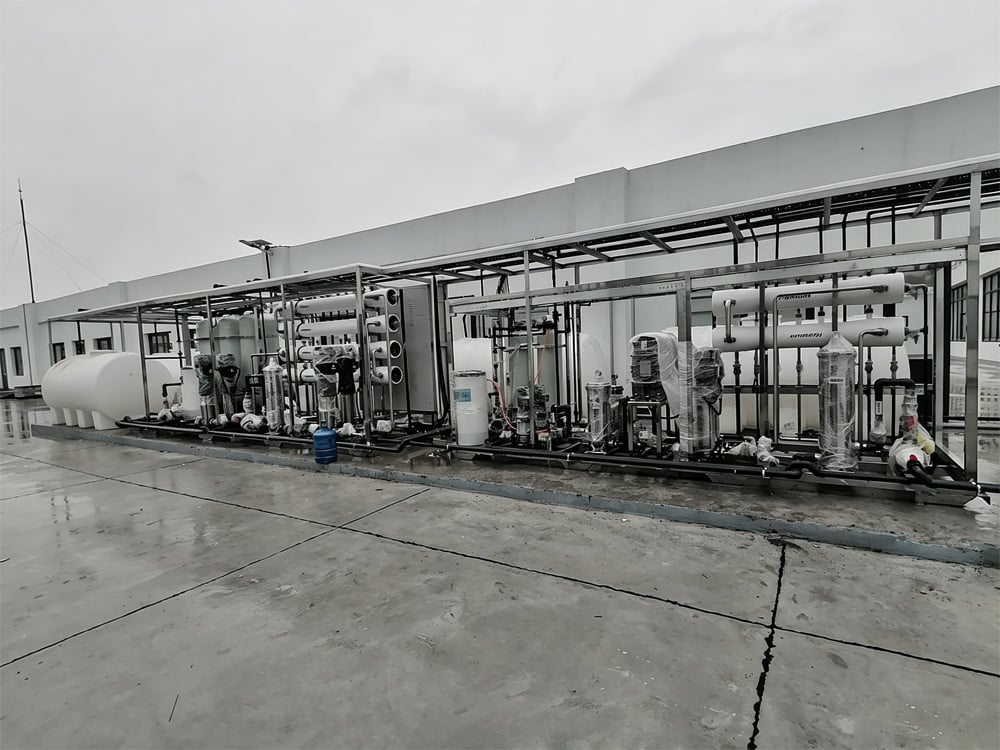
The recommended process consists of segregated collection, pretreatment, decomplexation, fluoride and silica removal, coagulation and sedimentation, advanced oxidation, UF + anti-fouling RO membrane treatment, and concentrate volume reduction. Separate equalization minimizes hydraulic shock. Decomplexation removes heavy metal complexes, while dedicated fluoride/silica removal eliminates key contaminants. Advanced oxidation removes residual organics, and the UF-RO system produces reclaimed water suitable for wafer cleaning. Core equipment includes corrosion-resistant equalization tanks, decomplexation reactors, fluoride & silica removal reactors, intelligent dosing systems, anti-fouling membrane modules, online water quality analyzers, and PLC control systems.
The solution effectively addresses silica colloid accumulation, fluoride removal, heavy metal control, and membrane scaling while ensuring stable compliance for discharge and water reuse. Customized modular equipment is available with corrosion-resistant structures, anti-clogging flow channels, and compact layouts. All major equipment is CE, UL, and ISO certified. Water reuse exceeds 95%, maintenance frequency and sludge generation are significantly reduced, and the modular automated design supports future capacity expansion.
Bofu has successfully implemented wastewater treatment systems for multiple 8-inch and 12-inch silicon wafer manufacturing facilities. A flagship project with a treatment capacity of 1,200 m³/day has operated reliably for years, eliminating silica-related membrane fouling and controlling fluoride and silicate levels while passing environmental and factory acceptance. Supporting documents include patented technologies, CE/UL/ISO certifications, third-party water quality reports, project acceptance certificates, and reference projects.
Bofu provides complete EPC turnkey services, including site survey, wastewater analysis, customized process and equipment design, manufacturing, installation, commissioning, operation & maintenance, system upgrades, and lifetime consumables supply.
Workflow:
1. Site survey and water quality analysis.
2. Customized process design, quotation, and layout.
3. Equipment manufacturing and site construction.
4. Installation, commissioning, and performance verification.
5. Environmental acceptance assistance and operator training.
6. Long-term maintenance, inspection, upgrades, and technical support.

 EN