
seafood-processing-wastewater-treatment-industry-solution, seafood-processing-wastewater-treatment-industry-solution, /solutions
EN
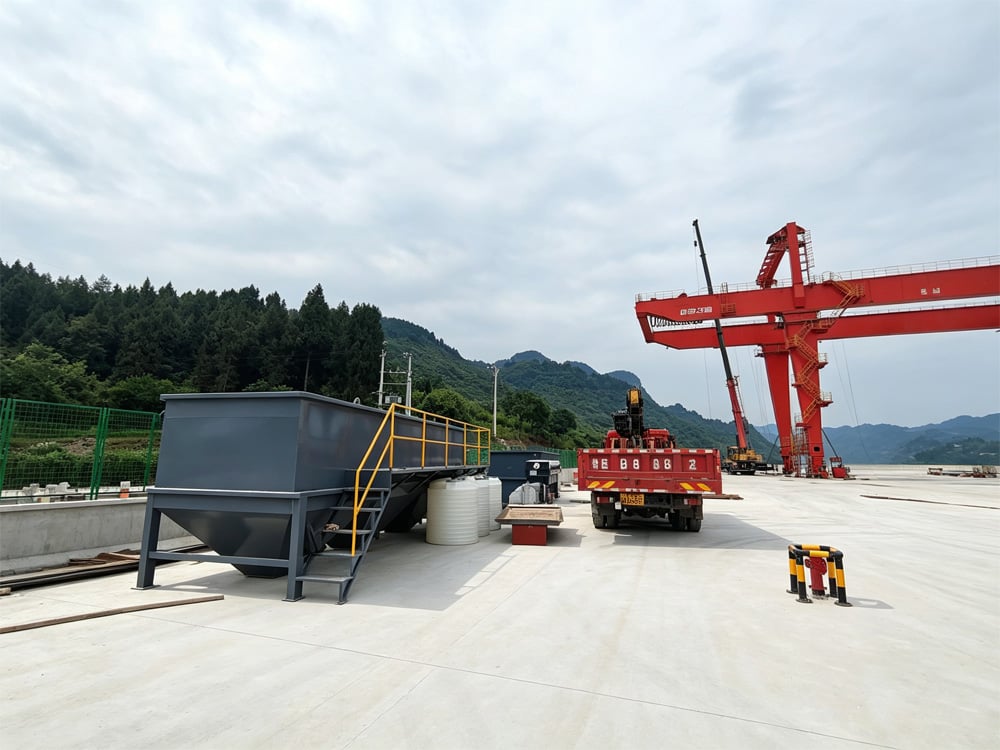
Seafood processing wastewater is primarily generated during fish, shrimp, and shellfish washing, thawing, sorting, descaling, shell removal, cooking, marinating, primary processing, equipment cleaning, and workshop floor washing. It is a typical high-salinity, high-protein, and high-nitrogen organic wastewater commonly found in the food processing industry.
The wastewater mainly consists of high-strength thawing wastewater, production washing wastewater, and workshop cleaning wastewater. Typical pollutants include suspended solids such as fish scales, shrimp shells, meat residues, as well as large quantities of dissolved proteins, amino acids, fats, colloidal substances, and salts.
This wastewater generally features high salinity, excellent biodegradability, but rapid biodegradation and spoilage, resulting in elevated COD, ammonia nitrogen (NH₃-N), total nitrogen (TN), and total phosphorus (TP) levels. Due to seasonal harvesting cycles and batch production, both wastewater quality and flow fluctuate significantly. Untreated wastewater can generate strong odors and cause eutrophication, making it a major environmental management challenge for seafood processing facilities.
Seafood processing operations are characterized by seasonal production peaks and concentrated wastewater discharge, where high-strength wastewater can overload biological treatment systems, leading to excessive COD, ammonia nitrogen, and total nitrogen in the effluent.
The wastewater contains high concentrations of proteins, colloids, and oils with strong adhesion properties, which easily foul pipelines, biological media, and equipment, resulting in frequent clogging, sludge accumulation, odor generation, and increased maintenance requirements.
Its relatively high salinity also reduces the activity of conventional microorganisms, often causing sludge bulking, poor settling performance, biomass inhibition, and unstable biological treatment performance.
Standard wastewater treatment equipment generally lacks sufficient corrosion resistance, salt tolerance, and anti-fouling capability to withstand seafood processing conditions. Additionally, seafood plants typically have limited installation space and highly variable production capacities, making traditional civil-engineered treatment systems difficult to expand or retrofit. Customized, industry-specific wastewater treatment solutions are therefore essential.
To address the characteristics of high-protein, high-ammonia, saline, and easily degradable seafood wastewater, our solution adopts the following process:
Mechanical Pretreatment → Oil Separation & Sedimentation → Flow Equalization → Salt-Tolerant Biological Treatment → Nitrogen & Phosphorus Removal → Advanced Purification & Water Reuse
Wastewater first passes through automatic bar screens and sedimentation tanks to remove fish residues, shell fragments, suspended solids, and floating oils.
An equalization tank stabilizes wastewater flow and pollutant concentrations, minimizing seasonal shock loading.
A salt-tolerant anaerobic biological system efficiently degrades high-strength organic matter and significantly reduces organic loading.
The wastewater then enters an A/O + MBR biological treatment system, providing enhanced removal of COD, ammonia nitrogen, total nitrogen, and total phosphorus.
Finally, precision filtration and disinfection ensure consistent compliance with discharge regulations, while reclaimed water can be reused for primary washing operations and facility cleaning.
This solution is specifically engineered for high-salinity, high-viscosity, odor-prone seafood processing wastewater, featuring enhanced nutrient removal, anti-clogging design, and superior corrosion resistance.
It effectively addresses key industry challenges including:
The system consistently produces effluent that complies with environmental discharge regulations while supporting water reuse.
Customized equipment configurations are available based on wastewater salinity, production capacity, plant layout, and site conditions. Features include corrosion-resistant housings, anti-fouling hydraulic channels, and compact modular skid-mounted systems, making the solution ideal for intermittent, high-load seafood processing operations.
All core mechanical, electrical, and water treatment equipment is certified to CE, UL, and ISO standards, ensuring international safety, quality, and regulatory compliance.
The system incorporates specialized salt-tolerant microbial cultures, providing excellent shock-load resistance, reducing maintenance frequency and sludge disposal costs.
Water reuse rates can exceed 90%, while the modular design minimizes footprint, allows flexible expansion, and supports fully automated operation to accommodate seasonal production fluctuations.
We have successfully completed numerous wastewater treatment projects for seafood processing facilities located in major coastal industrial regions.
A representative project involved a large-scale seafood processing wastewater treatment and water reuse system with a treatment capacity of 900 m³/day, serving mixed fish, shrimp, and shellfish processing operations.
The system successfully resolved challenges associated with high salinity, excessive nitrogen levels, equipment fouling, and odor generation, maintaining stable year-round operation while consistently meeting environmental discharge standards and regulatory inspections.
We provide comprehensive EPC (Engineering, Procurement & Construction) solutions for seafood processing wastewater treatment, including:

 EN