1. Wastewater Sources, Typical Contaminants & Water Characteristics
Refinery wastewater is primarily generated during crude oil pretreatment, atmospheric and vacuum distillation, catalytic cracking, catalytic reforming, hydroprocessing, product washing, cooling tower blowdown, and plant washdown operations. It is one of the largest-volume and most complex industrial wastewater streams in the petroleum refining industry.
Typical wastewater streams include oily wastewater, process wastewater, cooling system blowdown, and equipment cleaning wastewater. The primary contaminants include free oil, suspended oil, emulsified oil, sulfides, phenolic compounds, hydrocarbons, ammonia nitrogen (NH₃-N), dissolved inorganic salts, and, in certain processes, trace heavy metals.
Refinery wastewater is characterized by high oil content, stable oil emulsions, significant COD fluctuations, strong odors, moderate biodegradability, and highly variable hydraulic and contaminant loading. Stable emulsified oil is particularly difficult to separate through natural gravity settling, often leading to equipment fouling and environmental compliance challenges. Consequently, refinery wastewater treatment systems must meet stringent discharge regulations while maximizing water reuse.
2. Common Challenges Faced by Customers
Refinery wastewater treatment presents several industry-specific challenges.
Stable emulsified oil cannot be effectively removed using conventional separation technologies, frequently causing fouling and blockage in pipelines, biological treatment systems, and membrane units. This results in increased maintenance frequency and higher operating costs.
Oil, sulfides, and phenolic compounds can significantly inhibit microbial activity, reducing biological treatment efficiency and making it difficult to consistently achieve compliance for COD, ammonia nitrogen, and oil & grease discharge limits.
Continuous refinery operations generate frequent fluctuations in wastewater composition and flow rate. Conventional standardized treatment systems often lack sufficient resistance to oil contamination, corrosion, and hydraulic shock loading, resulting in unstable performance.
In addition, refinery facilities typically have limited installation space and require continuous production during expansion projects. Large conventional civil-treatment systems occupy substantial space and offer limited flexibility for capacity upgrades, creating demand for compact, customized wastewater treatment solutions specifically designed for refinery applications.
3. Treatment Process & Core Equipment Configuration
To address the characteristics of refinery wastewater—including high oil content, elevated organic loading, and fluctuating water quality—we employ a proven treatment process consisting of:
Oil-Water Separation → Wastewater Conditioning & Coagulation → Dissolved Air Flotation (DAF) → Biological Treatment → Advanced Filtration → Water Reuse
Wastewater first passes through an API oil separator or oil separation tank to remove free-floating oil, followed by equalization to stabilize flow rate and water quality.
A high-efficiency dissolved air flotation (DAF) system then breaks stable oil emulsions, effectively removing emulsified oil, suspended solids, and colloidal contaminants.
Following coagulation and sedimentation, an A/O (Anoxic/Oxic) biological treatment system removes COD, ammonia nitrogen, phenolic compounds, and other biodegradable organic pollutants.
Finally, precision filtration combined with anti-fouling membrane systems provides advanced polishing treatment, producing reclaimed water suitable for cooling tower makeup water and other industrial reuse applications.
Core equipment includes:
- Automatic oil-water separation units
- High-efficiency dissolved air flotation (DAF) systems
- Intelligent wastewater conditioning reactors
- Biological treatment systems
- Anti-fouling membrane filtration units
- Automatic chemical dosing systems
- Online water quality monitoring and intelligent process control systems
4. Solution Advantages
This solution is specifically engineered for the demanding conditions of the petroleum refining industry, effectively addressing challenges associated with free oil, emulsified oil, fluctuating organic loads, and equipment fouling while consistently meeting discharge and water reuse standards.
Customized equipment configurations are available according to oil concentration, wastewater characteristics, corrosion conditions, plant layout, and production capacity. Equipment can be designed with enhanced corrosion-resistant housings, oil-resistant structures, and reinforced oil separation technologies to meet the rigorous requirements of continuous refinery operations.
All core electrical, mechanical, and water treatment equipment complies with CE, UL, and ISO international certification standards, ensuring excellent operational safety, reliability, and compliance with global project acceptance requirements.
The integrated oil removal and biological treatment process provides excellent resistance to shock loading, significantly reducing equipment fouling, system downtime, and maintenance frequency.
The system achieves water recovery rates exceeding 90%, helping refineries substantially reduce freshwater consumption, wastewater discharge, and long-term operating costs.
Its modular skid-mounted design minimizes installation space, enables rapid deployment and future expansion, and supports fully automated intelligent operation for continuous refinery production.
5. Project References & Supporting Documentation
We have successfully completed numerous refinery and petrochemical wastewater treatment projects for major oil and petrochemical companies.
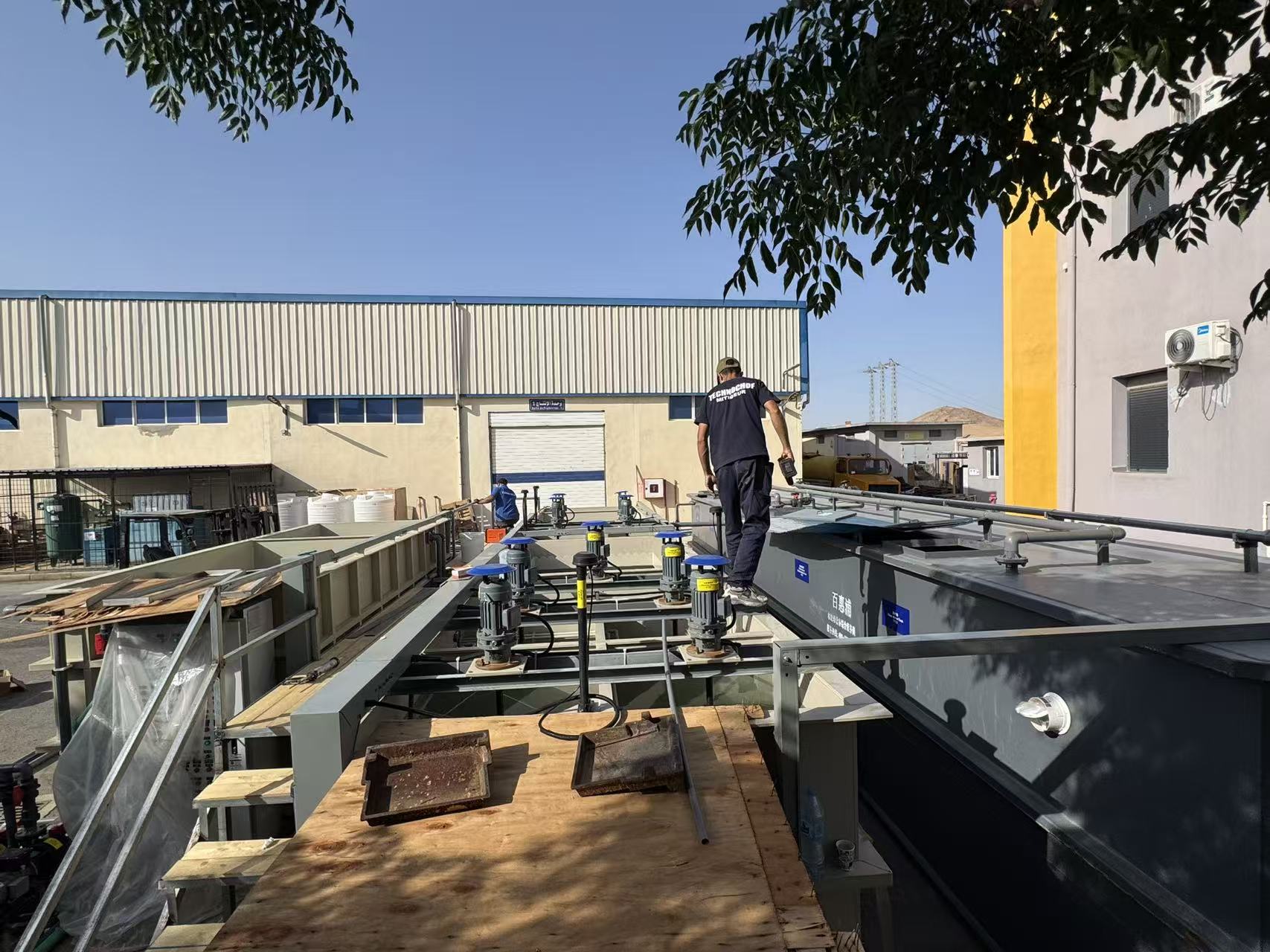
A representative reference project is the wastewater treatment system upgrade for a refinery with an annual processing capacity of over 10 million tons of crude oil, featuring a treatment capacity of 2,000 m³/day.
The system has consistently resolved industry challenges related to emulsified oil removal, unstable biological treatment performance, and equipment fouling, while maintaining reliable continuous operation and successfully passing environmental compliance inspections.
Supporting documentation includes:
- Patents for proprietary refinery wastewater oil removal technologies
- CE, UL, and ISO equipment certifications
- Third-party water quality analysis reports
- Project completion and environmental acceptance certificates
- Performance references from leading petrochemical and refinery projects
6. Service Scope & Cooperation Process
We provide turnkey EPC (Engineering, Procurement & Construction) solutions for refinery wastewater treatment, including:
- Site survey and wastewater sampling
- Laboratory water quality analysis
- Customized process engineering and equipment design
- Non-standard equipment manufacturing
- Equipment installation and commissioning
- Operation and maintenance (O&M) services
- System upgrades and retrofit projects
- Lifetime supply of spare parts and consumables
Standard Project Workflow
Site Survey & Wastewater Sampling
→ Water Quality Analysis Report
→ Customized Treatment Solution & Commercial Proposal
→ Contract Signing
→ Equipment Manufacturing & On-site Construction
→ Installation & Commissioning
→ Integrated System Startup Until Stable Compliance
→ Environmental Acceptance Assistance & Operator Training
→ Long-Term Preventive Maintenance, System Optimization & 24/7 Technical Support
Our refinery wastewater treatment solution enables petroleum refining facilities to achieve stable environmental compliance, maximize water reuse, reduce operating costs, and ensure reliable long-term operation under demanding refinery conditions.

 EN