
pcb-manufacturing-wastewater-treatment-industry-solution, pcb-manufacturing-wastewater-treatment-industry-solution, /solutions
EN
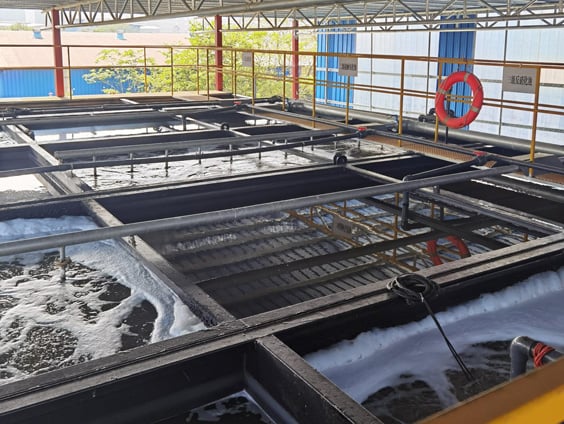
Rigid PCB (Printed Circuit Board) manufacturing wastewater is primarily generated during substrate grinding, drilling and dust removal, acid/alkali degreasing, electroless copper plating, copper and nickel electroplating, etching, photoresist stripping, solder mask printing, and various rinsing processes. It is recognized as one of the most complex industrial waste streams in the electronics manufacturing industry due to its diverse chemical composition and multiple wastewater categories.
The wastewater is generally classified into four major streams:
Typical contaminants include copper, nickel, tin and other heavy metal ions, complexing agents, residual acids and alkalis, etching chemicals, photoresist resins, organic solvents, high COD, and suspended particulate matter.
Compared with Flexible PCB (FPC) wastewater, rigid PCB manufacturing typically operates with more stable chemical formulations but generates significantly larger wastewater volumes and higher salt accumulation. A portion of heavy metals exists in stable complexed forms that cannot be completely removed through conventional coagulation and precipitation. Frequent fluctuations in wastewater quality and flow rate, combined with high scaling potential, place stringent requirements on treatment reliability and reclaimed water quality.
PCB manufacturing wastewater presents significant treatment challenges, particularly during etching and electroplating operations where complexed heavy metals are difficult to remove. Conventional treatment processes often fail to consistently achieve discharge limits for heavy metals, increasing environmental compliance risks.
Wastewater from photoresist stripping contains high concentrations of refractory organic compounds with poor biodegradability, creating severe shock loads on biological treatment systems and causing unstable COD removal and color fluctuations.
Frequent production shifts and process changes lead to substantial variations in wastewater composition and flow rate. Standard treatment systems generally have limited resistance to hydraulic and contaminant shock loads, resulting in pipeline scaling, membrane fouling, excessive chemical consumption, and increased sludge generation.
Furthermore, conventional standardized equipment often lacks sufficient corrosion resistance, salt tolerance, and anti-fouling performance to withstand the harsh operating conditions of PCB manufacturing over the long term.
As many PCB production facilities continue expanding capacity while operating within limited factory space, traditional civil wastewater treatment plants occupy excessive land and offer limited flexibility for future upgrades. Customized, modular treatment systems are increasingly required to support large-scale, continuous PCB manufacturing.
To address the characteristics of high salinity, complex heavy metals, and fluctuating organic loads, our solution adopts the following proven treatment process:
Segregated Collection → Complex-Breaking & Conditioning → Coagulation & Sedimentation → Advanced Oxidation → Biological Treatment → Membrane Reclamation
Different wastewater streams are separately collected and equalized to eliminate cross-contamination and reduce hydraulic shock loading.
A dedicated complex-breaking process decomposes stable heavy metal complexes, followed by precision chemical precipitation to efficiently remove copper, nickel, and other characteristic contaminants.
Coagulation and clarification remove suspended solids and colloidal impurities, while a Fenton advanced oxidation process degrades refractory photoresist organics.
Residual COD is further removed through biological treatment, followed by Ultrafiltration (UF) and anti-fouling Reverse Osmosis (RO) systems to produce high-quality reclaimed water suitable for production rinsing and cleaning applications.
Core equipment includes:
This solution is specifically designed for the demanding operating conditions of high-volume rigid PCB manufacturing, effectively addressing key industry challenges including heavy metal compliance, refractory photoresist organics, high salinity, scaling, and fluctuating wastewater quality.
The treated effluent consistently meets both industrial discharge standards and high-purity water reuse requirements.
Customized non-standard equipment can be engineered according to wastewater volume, salinity, plant layout, and production conditions, including reinforced corrosion-resistant structures, anti-scaling flow channels, and compact modular treatment units optimized for highly corrosive and saline environments.
All core mechanical equipment, water treatment systems, and electrical control components are certified to CE and UL international standards, ensuring operational safety, reliability, and compliance with global electronics manufacturing requirements.
The system offers excellent shock-load resistance, low operating costs, and water reuse rates exceeding 95%, significantly reducing freshwater consumption and hazardous waste disposal expenses.
Its modular design enables flexible capacity expansion and fully automated operation, making it ideal for long-term production growth and continuous manufacturing.
We have successfully delivered numerous wastewater treatment projects for large-scale PCB industrial parks and rigid PCB manufacturing facilities.
A representative reference project involved a comprehensive PCB wastewater treatment and water reuse system with a treatment capacity of 1,500 m³/day, designed to treat integrated electroplating, etching, and photoresist wastewater.
The system has consistently resolved challenges related to heavy metal residues, COD fluctuations, membrane scaling, and fouling, maintaining continuous year-round operation while successfully passing environmental compliance inspections and internal factory acceptance.
Supporting qualifications include:
We provide comprehensive EPC (Engineering, Procurement & Construction) solutions for PCB manufacturing wastewater treatment, including:

 EN