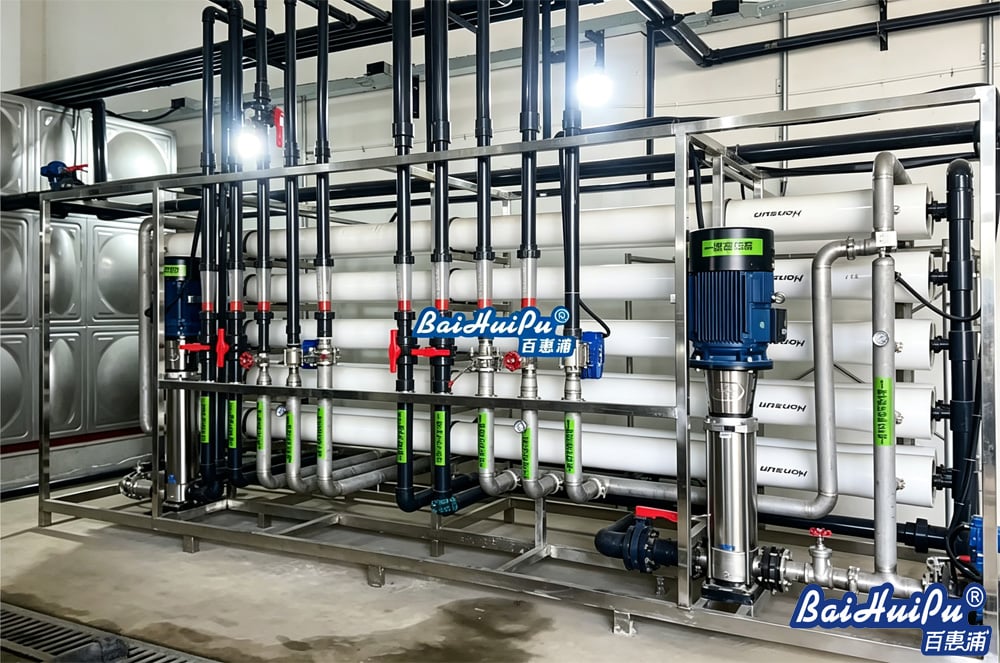
1. Wastewater Sources, Typical Pollutants, and Water Quality Characteristics
Beverage wastewater is primarily generated during the production of carbonated soft drinks, fruit juices, tea beverages, bottled water, and functional beverages, including raw material washing, ingredient mixing, filling, sterilization, CIP (Clean-in-Place) pipeline cleaning, production line washing, and workshop floor cleaning. It is a typical food industry wastewater characterized by high concentrations of sugars and readily biodegradable organic matter.
The wastewater mainly consists of production cleaning wastewater, equipment rinse water, residual process liquids, and floor wash water. Typical pollutants include sucrose, fructose, pectin, organic acids, flavoring residues, and small amounts of suspended solids, with the primary regulatory parameters being COD, BOD, ammonia nitrogen (NH₃-N), and total phosphorus (TP).
Beverage wastewater has excellent biodegradability and generally contains no heavy metals or toxic contaminants. However, batch production and frequent product changeovers result in significant fluctuations in wastewater quality and flow. High sugar concentrations can rapidly ferment and acidify, promoting eutrophication and microbial growth, while short-term high-strength discharges can create substantial organic shock loads. Consequently, stable wastewater treatment performance is essential for environmental compliance.
2. Common Challenges Faced by Beverage Manufacturers
Frequent production start-ups, shutdowns, and product changeovers cause significant fluctuations in organic loading. During peak production periods, high-strength sugar-rich wastewater can overload biological treatment systems, resulting in unstable COD and ammonia nitrogen removal.
Dissolved sugars and colloidal substances readily adhere to pipelines, biological media, and equipment surfaces, promoting biofilm formation, algae growth, scaling, and increased maintenance requirements.
Conventional treatment processes often lack sufficient resistance to hydraulic and organic shock loading, leading to poor sludge settling, biomass instability, and inconsistent system performance.
Standardized wastewater treatment equipment is generally not designed for the hygienic requirements and intermittent discharge patterns of beverage production facilities. Many systems also offer inadequate anti-fouling and corrosion resistance.
Additionally, beverage plants typically have limited installation space and frequently expand production capacity, making traditional concrete treatment facilities difficult to retrofit. Customized, modular wastewater treatment systems are therefore preferred.
3. Treatment Process and Core Equipment Configuration
To address the characteristics of high-sugar, highly biodegradable, and highly variable beverage wastewater, our solution utilizes the following proven treatment process:
Pretreatment & Filtration → Flow Equalization & Conditioning → Anaerobic Load Reduction → Aerobic Biological Treatment → Advanced Sedimentation & Filtration → Water Reuse
Wastewater first passes through automatic mechanical bar screens and precision filtration to remove suspended solids and large colloidal particles.
An equalization tank balances wastewater flow and pollutant concentrations, minimizing the impact of batch production fluctuations.
A high-efficiency anaerobic reactor removes large quantities of dissolved sugars and organic matter, significantly reducing the incoming COD load.
The wastewater then enters an A/O biological treatment system, providing efficient removal of residual organic matter, ammonia nitrogen, and total phosphorus.
Finally, sedimentation, precision filtration, and disinfection ensure consistent compliance with discharge standards. Reclaimed water can be reused for workshop floor cleaning and preliminary equipment washing where appropriate.
Core Equipment
- Automatic mechanical bar screen
- Flow equalization and conditioning system
- High-efficiency anaerobic reactor
- A/O biological treatment system
- High-rate sedimentation tank
- Intelligent chemical dosing system
- Online water quality monitoring system
4. Solution Advantages
This solution is specifically designed for high-sugar organic wastewater generated by beverage manufacturing, offering excellent resistance to hydraulic and organic shock loads while effectively accommodating production changeovers and intermittent operation.
The system consistently produces effluent that complies with environmental discharge regulations and supports water reuse within beverage production facilities.
Customized equipment configurations are available based on production capacity, peak wastewater flow, and plant layout, featuring anti-fouling, corrosion-resistant housings, compact modular skid-mounted systems, and hygienic designs that minimize microbial and algae growth, making them well suited for clean beverage production environments.
All core mechanical, electrical, and water treatment equipment is certified to CE, UL, and ISO standards, ensuring international safety, quality, and regulatory compliance.
The process delivers high organic removal efficiency, stable sludge performance, reduced operating costs, and fewer maintenance shutdowns.
Water reuse rates can exceed 90%, while the modular design minimizes installation space, allows flexible expansion, and supports fully automated operation to accommodate future production growth and flexible manufacturing requirements.
5. Project Experience and Supporting Credentials
We have successfully completed numerous wastewater treatment projects for manufacturers of bottled beverages, fruit juices, tea beverages, and functional drinks.
A representative project involved a comprehensive wastewater treatment and water reuse system for a large beverage industrial park with a treatment capacity of 1,100 m³/day.
The system effectively treated mixed beverage wastewater from multiple production lines, successfully overcoming challenges related to high sugar loading, fluctuating wastewater quality, and microbial growth, while maintaining stable year-round operation and passing environmental acceptance inspections and routine regulatory audits.
Supporting qualifications include:
- Proprietary patents for beverage wastewater treatment technologies
- CE, UL, and ISO certified equipment
- Independent third-party water quality testing reports
- Project acceptance documentation
- Proven references from leading food and beverage manufacturers
6. Service Scope and Project Execution Process
We provide comprehensive EPC (Engineering, Procurement & Construction) solutions for beverage wastewater treatment, including:
- On-site survey and engineering assessment
- Wastewater sampling and laboratory analysis
- Customized process and system design
- Non-standard equipment manufacturing
- Installation and commissioning
- Operation and maintenance services
- System upgrades and performance optimization
- Lifetime supply of consumables and spare parts
Standard Project Workflow
- On-site survey, wastewater sampling, and laboratory analysis
- Development of a customized treatment solution and commercial quotation based on beverage production conditions
- Contract signing followed by equipment manufacturing and on-site construction
- System installation, commissioning, and integrated trial operation until stable compliance is achieved
- Assistance with environmental acceptance inspections and specialized operator training
- Long-term preventive maintenance, system optimization, equipment upgrades, and 24/7 technical support

 EN