
45-t/d-domestic-wastewater-treatment-system-for-power-plant-facilities, 45-t/d-domestic-wastewater-treatment-system-for-power-plant-facilities, /case-studies
EN
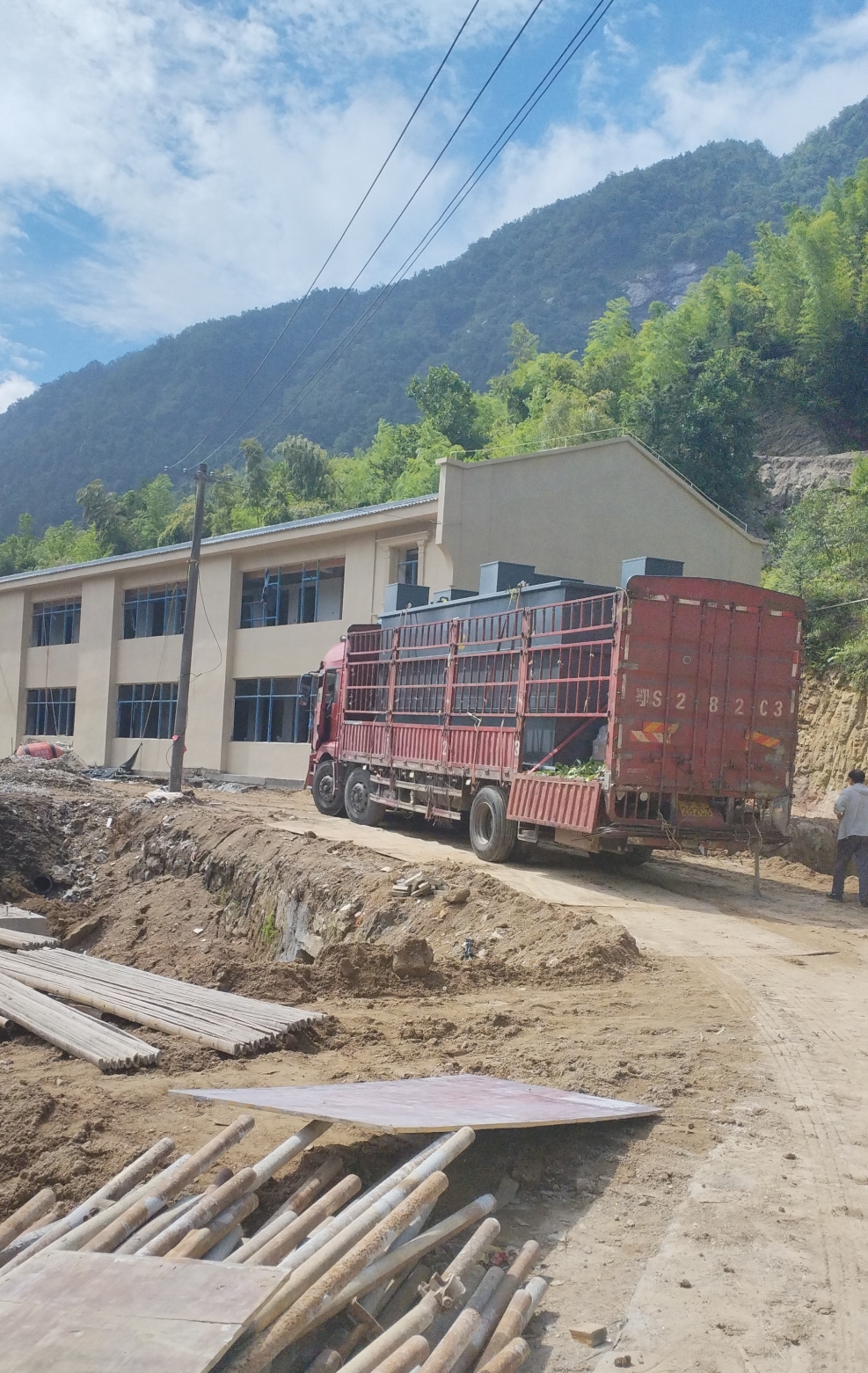
Customized for Hubei Yuetong Electric Power plant domestic wastewater treatment. Featuring Hydrolysis Acidification + Contact Oxidation + MBR + Disinfection process, handling 45 m³/day with stable effluent quality and automated operation.
Basic Project Information
Treatment Capacity:
45 m³/day, with a hydraulic loading capacity of 1.875 m³/h, suitable for continuous and intermittent wastewater discharge conditions.
Project Partner:
Hubei Yuetong Electric Power Engineering Co., Ltd.
Wastewater Type:
Domestic wastewater generated from plant employees, including restroom wastewater, washing wastewater, canteen wastewater, and daily office sewage.
Main Treatment Process:
Hydrolysis Acidification + Biological Contact Oxidation + MBR Membrane Filtration + Disinfection
Applicable Discharge Requirement:
Designed according to domestic wastewater discharge requirements, municipal sewage network connection standards, and applicable local environmental regulations.
|
 |
Main Treatment Units
◆ Pretreatment & Equalization Tank
Balances wastewater flow and pollutant concentration fluctuations caused by different working schedules, providing stable operating conditions for downstream treatment units.
◆ Hydrolysis Acidification Tank
Breaks down complex organic compounds into biodegradable substances and improves wastewater biodegradability.
◆ Biological Contact Oxidation Tank
Uses aerobic microorganisms to remove major pollutants including COD, BOD₅, ammonia nitrogen, and organic contaminants.
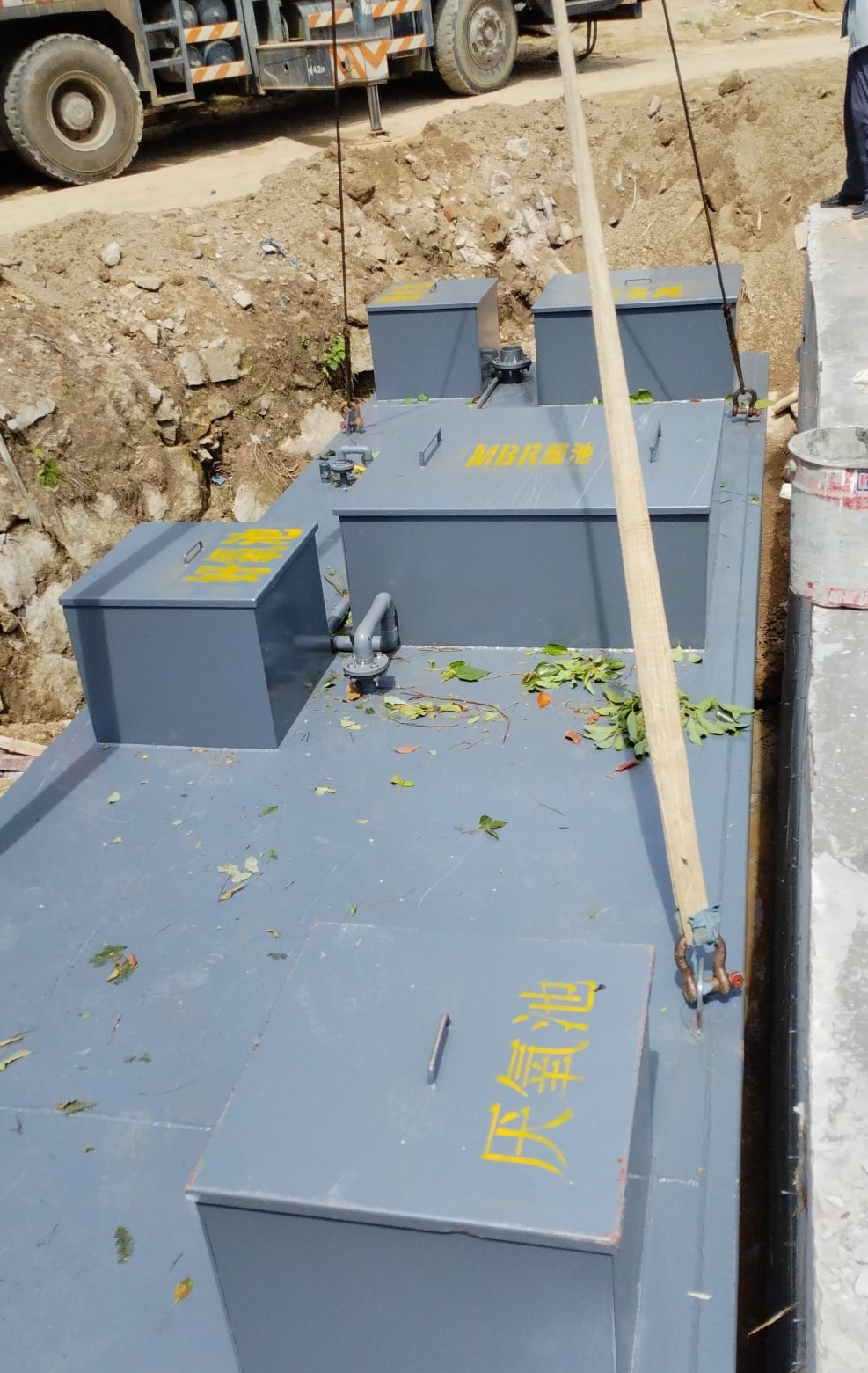
◆ MBR Membrane Treatment Unit
Equipped with PVDF membrane modules to enhance solid-liquid separation, improve effluent clarity, and maintain stable treatment performance.
◆ Disinfection Tank
Applies terminal disinfection treatment to reduce microbial content and improve treated water safety.
|
 |
 |
Complete Treatment Process
Domestic Wastewater → Mechanical Screening → Equalization Tank → Hydrolysis Acidification Tank → Biological Contact Oxidation Tank → MBR Membrane Filtration Tank → Disinfection Tank → Qualified Discharge / Reuse
Typical Effluent Performance
|
Parameter |
Designed Effluent Value |
|
COD |
≤50 mg/L |
|
BOD₅ |
≤10 mg/L |
|
SS |
≤10 mg/L |
|
Ammonia Nitrogen |
≤5 mg/L |
|
pH |
6–9 |
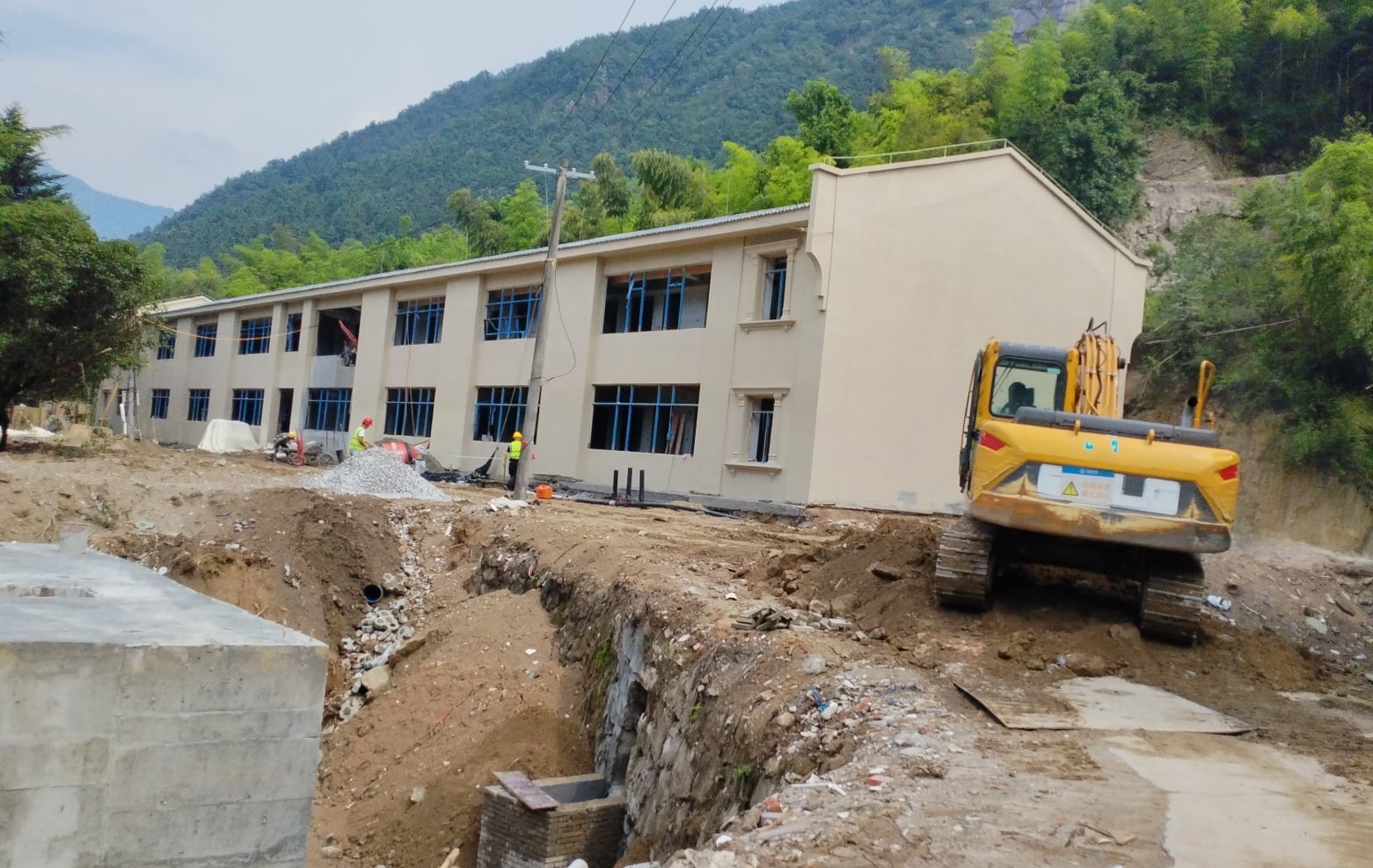
The 45 m³/day integrated domestic wastewater treatment system was customized for Hubei Yuetong Electric Power Engineering Co., Ltd. to treat domestic sewage generated within the power facility, including employee washing wastewater, canteen wastewater, restroom discharge, and office-area domestic sewage.
The project addresses common wastewater management challenges in industrial facilities, such as fluctuating wastewater flow, unstable pollutant loads, and difficulties in achieving consistent environmental compliance. The system provides a compact and practical wastewater treatment solution for power engineering sites requiring reliable domestic sewage management.
Due to the operational characteristics of power plant facilities, domestic wastewater generation varies significantly according to working schedules. Higher discharge volumes typically occur during working hours, while weekends and holidays may experience reduced wastewater flow. Therefore, the treatment system was designed with strong adaptability to variable hydraulic loading conditions.
The wastewater first passes through a mechanical screening unit, where hair, suspended solids, and larger impurities are removed to reduce the risk of blockage and protect downstream equipment. The screened wastewater then enters the equalization tank, where flow and pollutant concentrations are balanced to provide stable operating conditions for subsequent biological treatment.
After equalization, wastewater enters the hydrolysis acidification tank. Through anaerobic microbial activity, complex organic substances, grease components, and colloidal pollutants are converted into smaller biodegradable compounds. This process improves wastewater biodegradability and enhances the efficiency of subsequent aerobic treatment stages.
The biological contact oxidation tank serves as the primary organic removal unit. High-performance biological carriers provide a suitable environment for microbial growth, while continuous aeration supports the degradation of COD, BOD₅, ammonia nitrogen, and other organic pollutants. This biological process helps maintain stable treatment performance under changing wastewater conditions.
To further improve effluent quality, the system integrates an MBR membrane filtration unit. The PVDF membrane modules provide efficient separation of activated sludge, suspended solids, colloidal particles, and residual microorganisms. Compared with conventional biological treatment alone, MBR technology offers improved solid-liquid separation and produces clearer treated water suitable for strict discharge or reuse requirements.
Following membrane treatment, wastewater enters the disinfection tank for final microbial control. The disinfection process reduces bacteria and other microorganisms, helping prevent odor generation and supporting safe discharge conditions.
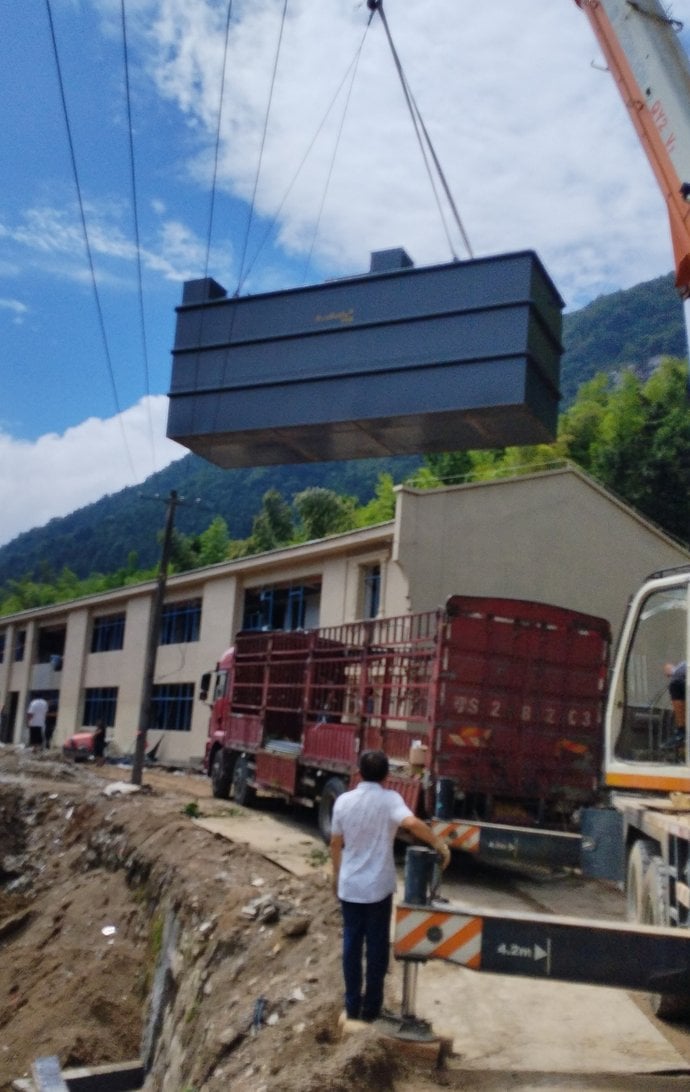
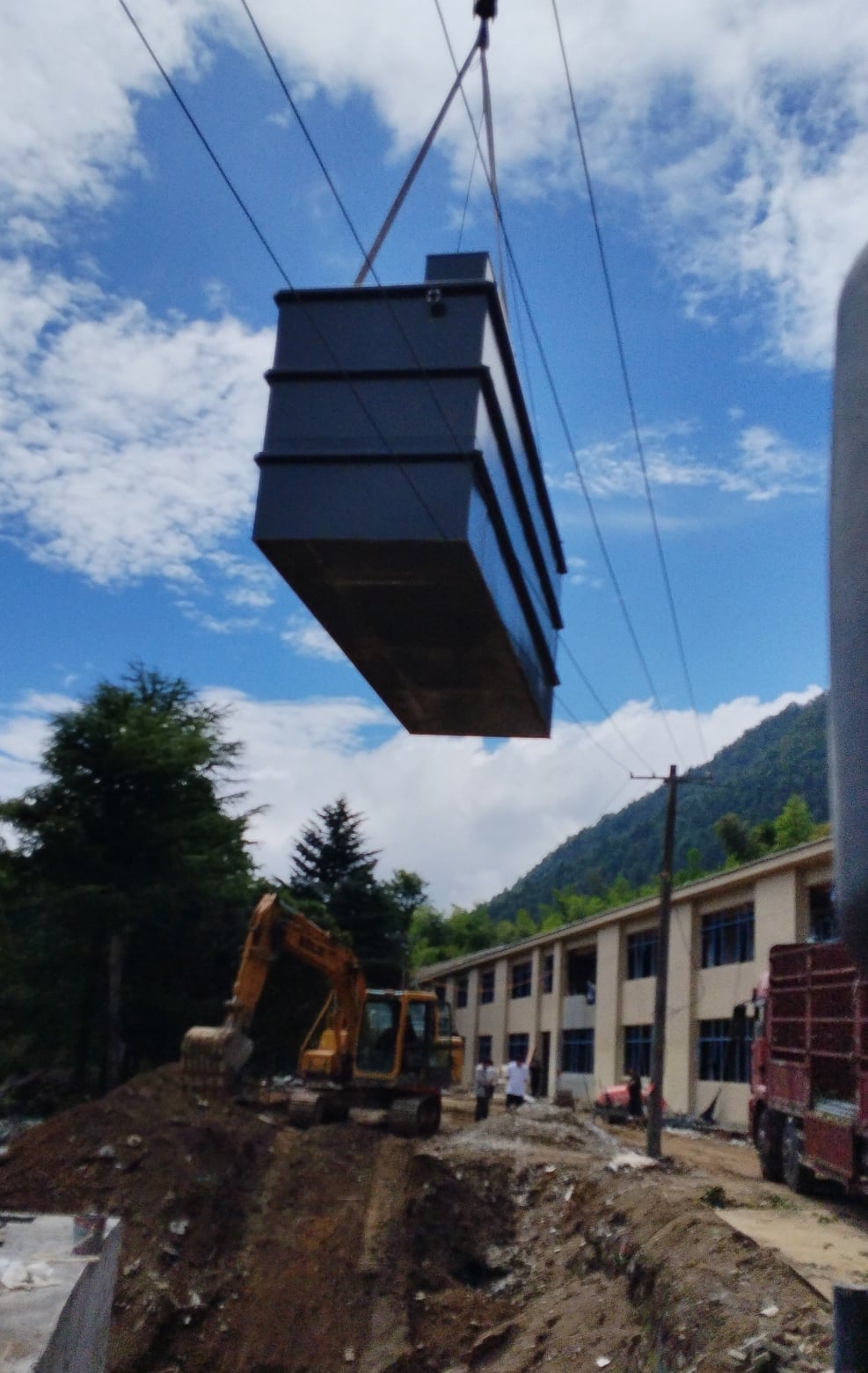
The complete system adopts an integrated modular design with flexible installation options, including underground installation where required. The compact structure minimizes land occupation and can be integrated into existing factory environments without affecting daily operations.
Equipped with an automatic electrical control system, the equipment supports intelligent operation of aeration, water circulation, membrane cleaning, and chemical dosing processes. Routine operation mainly requires regular inspection and maintenance, reducing labor requirements and improving management efficiency.
This integrated wastewater treatment solution is suitable not only for power engineering facilities but also for factories, industrial parks, construction project camps, small residential communities, and other locations requiring decentralized domestic wastewater treatment. With mature biological treatment technology and modular design, the system provides a practical solution for stable wastewater discharge compliance and environmental management.
 |

 EN